


- Content Hub
- Discipline
Discipline
back- Anatomy & Physiology Astronomy Biochemistry Biology Business Chemistry College Success Communication Economics Electrical Engineering English Environmental Science Geography Geology History Mathematics Music & Theater Nutrition and Health Philosophy & Religion Physics Psychology Sociology Statistics
- Digital
- Solutions
- News & Media
- Our Story
- Contact Us

Biology: How Life Works
Fourth Edition ©2023 James Morris; Daniel Hartl; Andrew Knoll; Robert Lue; Melissa Michael; Andrew Berry; Andrew Biewener; Brian Farrell; N. Michele Holbrook; Jessica Liu; Jean Heitz; Mark Hens; Elena Lozovsky; John Merrill; Randall Phillis; Debra Pires Formats: Achieve, E-book, Print
As low as C$71.99
As low as C$71.99
- Product Overview
- Content Material
- Assessment
- Reports and Insights
- Teaching Resources
- Support and Services

Authors
-

James Morris
James Morris is professor of biology at Brandeis University. He has taught a wide variety of courses for majors and non-majors, including introductory biology, evolution, genetics and genomics, epigenetics, comparative vertebrate anatomy, and a first-year seminar on Darwin’s On the Origin of Species. He is the recipient of numerous teaching awards from Brandeis and Harvard. His research focuses on the field of epigenetics and makes use of the fruit fly Drosophila melanogaster as a model organism. Dr. Morris received a PhD in genetics from Harvard University and an MD from Harvard Medical School. He was a Junior Fellow in the Society of Fellows at Harvard University and a National Academies Education Fellow and Mentor in the Life Sciences. He is an author of the college-level introductory biology textbook Biology: How Life Works and is a regular contributor to The American Biology Teacher. He has also served as a reader and participated in standard setting for the AP® Biology exam.

-

Daniel Hartl
Daniel L. Hartl is Higgins Professor of Biology in the Department of Organismic and Evolutionary Biology at Harvard University and Professor of Immunology and Infectious Diseases at the Harvard T. H. Chan School of Public Health. He has taught highly popular courses in genetics and evolution at both the introductory and advanced levels. His lab studies molecular evolutionary genetics and population genetics and genomics. Dr. Hartl has been awarded the Thomas Hunt Morgan Medal from the Genetics Society of America, the Samuel Weiner Outstanding Scholar Award, and the Gold Medal of the Stazione Zoologica Anton Dohrn in Naples, Italy. He is a member of the National Academy of Sciences and the American Academy of Arts and Sciences. He has served as President of the Genetics Society of America and President of the Society for Molecular Biology and Evolution. Dr. Hartl’s PhD is from the University of Wisconsin, and he did postdoctoral studies at the University of California, Berkeley. Before joining the Harvard faculty, he served on the faculties of the University of Minnesota, Purdue University, and Washington University Medical School. In addition to publishing more than 450 scientific articles, Dr. Hartl has authored or coauthored 35 books.

-

Andrew Knoll
Andrew H. Knoll is Fisher Research Professor of Natural History in the Department of Organismic and Evolutionary Biology at Harvard University. He is also Professor of Earth and Planetary Sciences and taught introductory courses for many years in both departments. Dr. Knoll’s research focuses on the early evolution of life, Earth dynamic environmental history, and the interconnections between the two. He has also worked extensively on the early evolution of animals, mass extinction, and plant evolution, and he served on the science team for NASA’s MER mission to Mars. Dr. Knoll received the Phi Beta Kappa Book Award in Science for Life on a Young Planet. In 2018, he was awarded the International Prize for Biology and in 2022, he received the prestigious Crafoord Prize in Geosciences for his research on Earth’s early history. He is a member of the National Academy of Sciences and a foreign member of the Royal Society of London. Dr. Knoll received his PhD from Harvard University and taught at Oberlin College before returning to Harvard.

-

Robert Lue
Robert Lue was Professor of Molecular and Cellular Biology at Harvard University and the Richard L. Menschel Faculty Director of the Derek Bok Center for Teaching and Learning. Dr. Lue had a longstanding commitment to interdisciplinary teaching and research and chaired the faculty committee that developed the first integrated science foundation in the country to serve science majors as well as pre-medical students. The founding director of Life Sciences Education at Harvard, Dr. Lue led a complete redesign of the introductory curriculum, redefining how the university can more effectively foster new generations of scientists as well as science-literate citizens. Dr. Lue also developed award-winning multimedia, including the animation The Inner Life of the Cell. He coauthored undergraduate biology textbooks and chaired education conferences on college biology for the National Academies and the National Science Foundation and on diversity in science for the Howard Hughes Medical Institute and the National Institutes of Health. In 2012, Dr. Lue’s extensive work on using technology to enhance learning took a new direction when he became faculty director of university-wide online education initiative HarvardX. Dr. Lue earned his PhD from Harvard University.

-

Melissa Michael
Melissa Michael is Associate Director for Curriculum and Instruction in the School of Molecular and Cellular Biology at the University of Illinois at Urbana-Champaign. Associate Director Michael primarily focuses on the continuing development of the School’s undergraduate curricula. Her research focuses on the ways in which formative assessment strategies affect student learning outcomes in large-enrollment courses. She leads a new initiative to bring inclusive teaching practices to STEM courses. A member of the leadership for Mobile Summer Institutes for Scientific Teaching, she is now serving as an officer on the inaugural Executive Committee for the National Institute on Scientific Teaching.

-

Andrew Berry
Andrew Berry is Lecturer in the Department of Organismic and Evolutionary Biology and an undergraduate advisor in the Life Sciences at Harvard University. With research interests in evolutionary biology and history of science, he teaches courses that either focus on one of the areas or combine the two. He has written two books: Infinite Tropics, a collection of the writings of Alfred Russel Wallace, and, with James D. Watson, DNA: The Secret of Life, which is part history, part exploration of the controversies surrounding DNA-based technologies.

-

Andrew Biewener
Andrew Biewener is the Charles P. Lyman Professor of Biology in the Department of Organismic and Evolutionary Biology at Harvard University and Director of the Concord Field Station. He teaches both introductory and advanced courses in anatomy, physiology, and biomechanics. His research focuses on the comparative biomechanics and neuromuscular control of mammalian and avian locomotion, with relevance to biorobotics. He served as Deputy Editor-in-Chief for the Journal of Experimental Biology and has also served as President of the American Society of Biomechanics.

-

Brian Farrell
Brian D. Farrell is the Monique and Philip Lehner Professor for the Study of Latin America, a faculty member in the Department of Organismic and Evolutionary Biology, and Curator in Entomology at the Museum of Comparative Zoology at Harvard University. He is an authority on coevolution between insects and plants and a specialist on the biology of beetles. He teaches the large introductory course in organismic biology and a Freshmen Seminar in acoustic biology, and is interested in the impact of biophilia on human health. In 2011–2012, he was a Fulbright Scholar to the Universidad Autónoma de Santo Domingo in the Dominican Republic. Dr. Farrell received a BA in Zoology and Botany from the University of Vermont and MS and PhD from the University of Maryland.

-

N. Michele Holbrook
N. Michele Holbrook is Charles Bullard Professor of Forestry in the Department of Organismic and Evolutionary Biology at Harvard University, Head Tutor in Harvard’s undergraduate program in Environmental Policy and Public Policy, and Director of the Harvard Forest. She teaches introductory and advanced courses on plant biology and plant physiology, as well as courses on trees, forests, and climate change. Her research focuses on the physics and physiology of vascular transport in plants. Dr. Holbrook received her PhD from Stanford University.

-
Jessica Liu
Jessica C. Liu is a preceptor in the Department of Molecular and Cellular Biology at Harvard University with a focus on teaching, pedagogy, and curriculum development. Dr. Liu received her BS from The University of Texas at Austin and her PhD in biochemistry from Harvard in 2015. She has been teaching intermediate undergraduate courses along with Robert Lue and Alain Viel since 2016 and is the recipient of multiple teaching awards from Harvard. She also serves as a member of her department’s Board of Tutors in Biochemical Sciences to provide intellectual support and mentorship to undergraduate students.
-

Jean Heitz
Jean Heitz was Distinguished Faculty Associate at the University of Wisconsin – Madison, WI. She worked with the two-semester introductory sequence for biological sciences majors for over 40 years. Her primary roles included developing both interactive recitation activities designed to uncover and modify misconceptions in biology and open-ended investigative labs designed to give students a more authentic experience with science. The lab experience engaged all second-semester students in independent research, either mentored research or a library-based meta-analysis of an open question in the literature. She was also the advisor to the Peer Learning Association and was actively involved in TA training. She taught a graduate course in Teaching College Biology, presented active-learning workshops at a number of national and international meetings, and published a variety of lab modules, workbooks, and articles on biology education.

-
Mark Hens
Mark Hens is Associate Professor of Biology at the University of North Carolina Greensboro, where he has taught introductory biology since 1996. He is a National Academies Education Mentor in the Life Sciences and is the director of his department’s Introductory Biology Program. In this role, he guided the development of a comprehensive set of assessable student learning outcomes for the two-semester introductory biology course required of all science majors at UNCG. In various leadership roles in general education, both on his campus and statewide, he was instrumental in crafting a common set of assessable student learning outcomes for all natural science courses for which students receive general education credit on the 16 campuses of the University of North Carolina system.
-

Elena Lozovsky
Elena Lozovsky is Principal Staff Scientist in the Department of Organismic and Evolutionary Biology at Harvard University. She received her PhD in genetics from Moscow State University in Russia and before joining Harvard carried out research at the Institute of Molecular Biology in Moscow, Cornell University, and Washington University School of Medicine in St. Louis. Her research has focused on transposable elements and genome evolution in eukaryotes and on the evolution of drug resistance in malaria parasites. She has also had extensive experience in teaching genetics and evolution.

-

John Merrill
John Merrill is Faculty Emeritus in the College of Osteopathic Medicine at Michigan State University. He is former Director of the Biological Sciences Program which administers the core biology curriculum for all MSU science majors. He began his career studying the physiological ecology of marine algae but gradually shifted his focus to research on how undergraduate students learn biology and how to assess that learning. This work culminated in his leading “Beyond Multiple Choice” (beyondmultiplechoice.org) - a large, multi-institutional, NSF-funded project that developed an artificial intelligence (AI) system for computer-automated scoring of open-response assessment items.

-

Randall Phillis
Randall Phillis is Associate Professor of Biology at the University of Massachusetts Amherst. He has taught in the majors introductory biology course at this institution for 27 years and is a National Academies Education Mentor in the Life Sciences. With help from the Pew Center for Academic Transformation (1999), he has been instrumental in transforming the introductory biology course to an active learning format that makes use of classroom communication systems. He also directed an NSF-funded project to design model-based reasoning assessment tools for use in class and on exams. These tools are being designed to develop and evaluate student scientific reasoning skills, with a focus on topics in introductory biology. He is currently a core faculty leader in an HHMI Inclusive Excellence grant with a focus on how CUREs in the first year can improve inclusion and success of all students in life science education.

-

Debra Pires
Debra Pires is an Academic Administrator and Vice Chair for the Department of Life Sciences Core Education at the University of California, Los Angeles. She has been teaching the majors introductory biology courses for 16 years. She is also the Instructional Consultant for the Center for Education Innovation & Learning in the Sciences (CEILS), and a certified trainer for the Mobile Summer Institutes. Many of her efforts are focused on curricular redesign of introductory biology courses. Through her work with CEILS and the MoSIs, she coordinates faculty development workshops that facilitate pedagogical changes associated with curricular developments. Her current research focuses on the impact of the experience of active learning pedagogies in lower-division courses on student performance and concept retention in upper-division courses.

Table of Contents
Watch Jim Morris explain How Life Works addresses course challenges:
Address Challenges in the Classroom with "How Life Works"
Part 1 From Cells to Organisms
Chapter 1 Chemical, Cellular, and Evolutionary Foundations of Life
Case 1 Life’s Origin: Homeostasis, Information, and Energy
Chapter 2 Molecules of Life
Chapter 3 Cells, Membranes, and Homeostasis
Chapter 4 Nucleic Acids and Information Flow
Chapter 5 Protein Structure, Function, and Synthesis
Visual Synthesis 1 Gene Expression
Chapter 6 Making Life Work
Chapter 7 Cellular Respiration
Chapter 8 Photosynthesis
Visual Synthesis 2 Harnessing Energy
Case 2 Cancer: Cell Signaling, Form, and Division
Chapter 9 Cell Signaling
Chapter 10 Cell and Tissue Form
Chapter 11 DNA Replication and Cell Division
Visual Synthesis 3 Cellular Communities
Case 3 Your Personal Genome: Variation and Inheritance
Chapter 12 Genomes and Biotechnology
Chapter 13 Mutation and Genetic Variation
Chapter 14 Meiosis and Mendelian Inheritance
Chapter 15 Sex Chromosomes, Linked Genes, and Organelle Inheritance
Chapter 16 Complex Traits
Chapter 17 Genetic and Epigenetic Regulation
Chapter 18 Genes and Development
Visual Synthesis 4 Genetic Variation and Inheritance
Chapter 19 Viruses
Visual Synthesis 5 Viruses
Case 4 Malaria: Coevolution of Humans and a Parasite
Chapter 20 Evolution
Chapter 21 Species and Speciation
Visual Synthesis 6 Speciation
Chapter 22 Phylogeny, Fossils, and the History of Life
Chapter 23 Human Origins and Evolution
Visual Synthesis 7 History of Earth and Life
Part 2 From Organisms to the Environment
Case 5 The Human Microbiome: Diversity Within
Chapter 24 Bacteria and Archaea
Chapter 25 Eukaryotic Origins and Diversity
Chapter 26 Being Multicellular
Case 6 Agriculture: Feeding a Growing Population
Chapter 27 Plant Form, Function, and Diversity
Chapter 28 Plant Reproduction
Chapter 29 Plant Physiology
Visual Synthesis 8 Angiosperms
Chapter 30 Plant Growth and Development
Chapter 31 Plant Defense
Chapter 32 Fungi
Case 7 Bio-Inspired Design: Using Nature to Solve Problems
Chapter 33 Animal Form, Function, and Evolutionary History
Chapter 34 Animal Diversity
Visual Synthesis 9 Diversity Through Time
Chapter 35 Animal Nervous Systems
Chapter 36 Animal Movement
Chapter 37 Animal Endocrine Systems
Chapter 38 Animal Respiratory and Cardiovascular Systems [12]
Chapter 39 Animal Metabolism, Nutrition, and Digestion
Chapter 40 Animal Renal Systems
Visual Synthesis 10 Homeostasis [13]
Chapter 41 Animal Reproduction and Development
Chapter 42 Animal Immune Systems [14]
Case 8 Climate Change: Coral Reefs at Risk as the World Warms
Chapter 43 Animal Behavior and Behavioral Ecology
Chapter 44 Population Ecology
Chapter 45 Species Interactions and Communities
Visual Synthesis 11 Succession
Chapter 46 Ecosystem Ecology
Visual Synthesis 12 Flow of Matter and Energy Through Ecosystems
Chapter 47 Climate and Biomes
Chapter 48 Humans as a Planetary Force
Primers
Scientific Inquiry
Phylogenetic Trees
Quantitative Reasoning
Models
Probability and Statistics
Water Chemistry and Movement
Data and Data Visualization
Product Updates
Spring 2026 Update
Build Skills
- Skills Primer on Carbon Chemistry now includes a focused study session on electron transfer. This helps students understand this key concept and build confidence early.
Engage Students
- Reinforce key processes through interactive play with premade Sequence Games, or create your own with the new Sequence Activity Builder for added flexibility in the Games folder in Achieve.
- New JeoParody games extend engagement with additional topics in Anatomy and Evolution in the Games folder in Achieve.
- Expanded In-Class Activities—including Gene Drive (Ch 12), Mutation (Ch 13), Complex Traits (Ch 16), and Development (Ch 18)—provide ready-to-use opportunities for active learning, collaboration, and concept application.
Support Student Study
Guided Review Quizzes in each chapter, with the Multi-take setting, help students find what to focus on. This makes studying more targeted, efficient, and effective while supporting long-term learning and retention.
Spring 2026 Update
Empower Students with Skills That Last
Set students up for success from day one. Our Skills Primers are quick, interactive modules that build foundational study habits—so students come to class more confident, prepared, and ready to engage. These low-lift resources give students the tools they need—without adding to your workload or taking up instructional time.
- New section in our Quantitative Reasoning Primer covering Surface area/volume study
Make Biology More Relevant, Reflective, and Connected
Enhance engagement and deepen learning with new and revised activities that connect course content to real-world thinking and personal reflection. These low-lift, high-impact resources help students make meaning, see themselves in science, and stay actively involved—without adding to your workload.
- Connection-Based Games
- BioLinks (inspired by NYT Connections): Reinforce concepts by grouping terms, processes, and ideas into logical sets (four groups of four). Designed to work with the Interactive Visual Synthesis Maps--unique to How Life Works.
- Revamped Podcasts. Updated to highlight diverse scientists and provide easier integration into coursework. Two new podcasts featuring Nicole King on researching choanoflagellates and multicellularity and Sean Carroll on evolutionary developmental biology ("evo-devo") and animal diversity both interviewed by author Andy Knoll.
- Expanded In-Class Activity Library. Ready-to-use resources support hands-on exploration of key biology concepts in a collaborative classroom setting. Three new activities covering Mendelian segregation, independent assortment and climate change.
- Write-to-Learn Activities (BETA). AI-enabled short-form writing prompts and analyzers help students reflect on learning while giving instructors scalable, customizable grading tools.
- Text Updates. The 2025 Nobel Prize in Physiology or Medicine to the immunology chapter. In the 4e, regulatory T cells were added to that chapter. These were discovered and then characterized by Mary Brunkow, Fred Ramsdell and Shimon Sakaguchi, who were awarded the Nobel Prize for their work. These immune cells essentially prevent the immune system from harming the body. When they go awry, they result in autoimmune diseases.
New Companion Lab Manual designed to align with Morris, How Life Works.
Summer 2025 Update
Engage Students Before Class—So They’re Ready to Engage In Class
Help students come to class prepared, curious, and ready to learn. Our latest digital learning tools are designed to boost comprehension outside of class—so in-class time can be spent on deeper discussions and active learning.
- New Interactive Animation ActivitiesThese 89 activities bring key biological processes to life with embedded questions that challenge students to think actively as they watch. Assign them before class to help students build a foundation—so they walk in ready to apply, analyze, and explore.
- Scientific Discoveries – Chapter 1
- DNA – Chapter 4
- Gene Expression – Chapter 5
- Cellular Respiration – Chapter 7
- Photosynthesis – Chapter 8
- Cell Cycle & Mitosis – Chapter 11
- Meiosis – Chapter 14
- Natural Selection – Chapter 20
- Adaptive Radiation – Chapter 21
- History of Life (Parts 1–4) – Chapter 22
- Ecological Succession – Chapter 45
- Carbon Cycle – Chapter 46
New Sequence Activities
These activities guide students through intricate biological processes in a step-by-step format—helping them visualize, organize, and understand systems that often feel overwhelming.
Featured topics include:
Updated to Match the Latest in Biological Science
We’ve applied the latest scientific research to ensure your students are learning from the most up-to-date content available. Recent updates reflect important advances across biology, taxonomy, climate science, and public health. These updates ensure your course reflects the latest thinking in biology—backed by current data and inclusive of groundbreaking research.
Key content updates include:
- Revised phylogenies:
- Fungi (Fig. 32.15
- Bryophytes (now recognized as monophyletic; Fig. 27.3)
- New data and classifications:
- Updated species counts for plants (Chapter 27)
- COVID-19 data refresh (Chapter 19)
- Climate data (Case 8, Chapter 48)
- Tuberculosis statistics (Chapter 48)
- Clostridium difficile reclassified as Clostridioides difficile(Case 5), with “C. diff” retained as a common name
- New scientific insights:
- Revised understanding of chromatin structure—30 nm fiber now widely considered an artifact (Chapter 12, Fig. 12.19)
- Expanded content on Asgard archaea, key to understanding eukaryotic origins (Chapter 24)
- Celebrating scientific contributions:
- New spotlights on Jane Goodall (Chapter 48)
Spring 2024 Updates:
- Two new Podcasts and Reflection assignments for Case 6 Beronda Montgomery on how the environment influences plant growth and Sheila Colla on protecting native insect pollinators. How Life Works Podcasts feature the contributions of a diverse group of scientists doing current research related to each of the cases.
- Primers are designed to help students develop the skills they need to be successful in their biology courses and beyond. The new AI primer will introduce students to AI concepts and ethics.
- New in-class activities were added for Chapter 22 on the History of Life, to help give students a sense of time and scale and Chapters 20 and 47 on the Great Bear Rainforest and Kermode Bear fur coloration.
- Improvements were made to in-class activities throughout the course.
Authors
-
James Morris
James Morris is professor of biology at Brandeis University. He has taught a wide variety of courses for majors and non-majors, including introductory biology, evolution, genetics and genomics, epigenetics, comparative vertebrate anatomy, and a first-year seminar on Darwin’s On the Origin of Species. He is the recipient of numerous teaching awards from Brandeis and Harvard. His research focuses on the field of epigenetics and makes use of the fruit fly Drosophila melanogaster as a model organism. Dr. Morris received a PhD in genetics from Harvard University and an MD from Harvard Medical School. He was a Junior Fellow in the Society of Fellows at Harvard University and a National Academies Education Fellow and Mentor in the Life Sciences. He is an author of the college-level introductory biology textbook Biology: How Life Works and is a regular contributor to The American Biology Teacher. He has also served as a reader and participated in standard setting for the AP® Biology exam.
-
Daniel Hartl
Daniel L. Hartl is Higgins Professor of Biology in the Department of Organismic and Evolutionary Biology at Harvard University and Professor of Immunology and Infectious Diseases at the Harvard T. H. Chan School of Public Health. He has taught highly popular courses in genetics and evolution at both the introductory and advanced levels. His lab studies molecular evolutionary genetics and population genetics and genomics. Dr. Hartl has been awarded the Thomas Hunt Morgan Medal from the Genetics Society of America, the Samuel Weiner Outstanding Scholar Award, and the Gold Medal of the Stazione Zoologica Anton Dohrn in Naples, Italy. He is a member of the National Academy of Sciences and the American Academy of Arts and Sciences. He has served as President of the Genetics Society of America and President of the Society for Molecular Biology and Evolution. Dr. Hartl’s PhD is from the University of Wisconsin, and he did postdoctoral studies at the University of California, Berkeley. Before joining the Harvard faculty, he served on the faculties of the University of Minnesota, Purdue University, and Washington University Medical School. In addition to publishing more than 450 scientific articles, Dr. Hartl has authored or coauthored 35 books.
-
Andrew Knoll
Andrew H. Knoll is Fisher Research Professor of Natural History in the Department of Organismic and Evolutionary Biology at Harvard University. He is also Professor of Earth and Planetary Sciences and taught introductory courses for many years in both departments. Dr. Knoll’s research focuses on the early evolution of life, Earth dynamic environmental history, and the interconnections between the two. He has also worked extensively on the early evolution of animals, mass extinction, and plant evolution, and he served on the science team for NASA’s MER mission to Mars. Dr. Knoll received the Phi Beta Kappa Book Award in Science for Life on a Young Planet. In 2018, he was awarded the International Prize for Biology and in 2022, he received the prestigious Crafoord Prize in Geosciences for his research on Earth’s early history. He is a member of the National Academy of Sciences and a foreign member of the Royal Society of London. Dr. Knoll received his PhD from Harvard University and taught at Oberlin College before returning to Harvard.
-
Robert Lue
Robert Lue was Professor of Molecular and Cellular Biology at Harvard University and the Richard L. Menschel Faculty Director of the Derek Bok Center for Teaching and Learning. Dr. Lue had a longstanding commitment to interdisciplinary teaching and research and chaired the faculty committee that developed the first integrated science foundation in the country to serve science majors as well as pre-medical students. The founding director of Life Sciences Education at Harvard, Dr. Lue led a complete redesign of the introductory curriculum, redefining how the university can more effectively foster new generations of scientists as well as science-literate citizens. Dr. Lue also developed award-winning multimedia, including the animation The Inner Life of the Cell. He coauthored undergraduate biology textbooks and chaired education conferences on college biology for the National Academies and the National Science Foundation and on diversity in science for the Howard Hughes Medical Institute and the National Institutes of Health. In 2012, Dr. Lue’s extensive work on using technology to enhance learning took a new direction when he became faculty director of university-wide online education initiative HarvardX. Dr. Lue earned his PhD from Harvard University.
-
Melissa Michael
Melissa Michael is Associate Director for Curriculum and Instruction in the School of Molecular and Cellular Biology at the University of Illinois at Urbana-Champaign. Associate Director Michael primarily focuses on the continuing development of the School’s undergraduate curricula. Her research focuses on the ways in which formative assessment strategies affect student learning outcomes in large-enrollment courses. She leads a new initiative to bring inclusive teaching practices to STEM courses. A member of the leadership for Mobile Summer Institutes for Scientific Teaching, she is now serving as an officer on the inaugural Executive Committee for the National Institute on Scientific Teaching.
-
Andrew Berry
Andrew Berry is Lecturer in the Department of Organismic and Evolutionary Biology and an undergraduate advisor in the Life Sciences at Harvard University. With research interests in evolutionary biology and history of science, he teaches courses that either focus on one of the areas or combine the two. He has written two books: Infinite Tropics, a collection of the writings of Alfred Russel Wallace, and, with James D. Watson, DNA: The Secret of Life, which is part history, part exploration of the controversies surrounding DNA-based technologies.
-
Andrew Biewener
Andrew Biewener is the Charles P. Lyman Professor of Biology in the Department of Organismic and Evolutionary Biology at Harvard University and Director of the Concord Field Station. He teaches both introductory and advanced courses in anatomy, physiology, and biomechanics. His research focuses on the comparative biomechanics and neuromuscular control of mammalian and avian locomotion, with relevance to biorobotics. He served as Deputy Editor-in-Chief for the Journal of Experimental Biology and has also served as President of the American Society of Biomechanics.
-
Brian Farrell
Brian D. Farrell is the Monique and Philip Lehner Professor for the Study of Latin America, a faculty member in the Department of Organismic and Evolutionary Biology, and Curator in Entomology at the Museum of Comparative Zoology at Harvard University. He is an authority on coevolution between insects and plants and a specialist on the biology of beetles. He teaches the large introductory course in organismic biology and a Freshmen Seminar in acoustic biology, and is interested in the impact of biophilia on human health. In 2011–2012, he was a Fulbright Scholar to the Universidad Autónoma de Santo Domingo in the Dominican Republic. Dr. Farrell received a BA in Zoology and Botany from the University of Vermont and MS and PhD from the University of Maryland.
-
N. Michele Holbrook
N. Michele Holbrook is Charles Bullard Professor of Forestry in the Department of Organismic and Evolutionary Biology at Harvard University, Head Tutor in Harvard’s undergraduate program in Environmental Policy and Public Policy, and Director of the Harvard Forest. She teaches introductory and advanced courses on plant biology and plant physiology, as well as courses on trees, forests, and climate change. Her research focuses on the physics and physiology of vascular transport in plants. Dr. Holbrook received her PhD from Stanford University.
-
Jessica Liu
Jessica C. Liu is a preceptor in the Department of Molecular and Cellular Biology at Harvard University with a focus on teaching, pedagogy, and curriculum development. Dr. Liu received her BS from The University of Texas at Austin and her PhD in biochemistry from Harvard in 2015. She has been teaching intermediate undergraduate courses along with Robert Lue and Alain Viel since 2016 and is the recipient of multiple teaching awards from Harvard. She also serves as a member of her department’s Board of Tutors in Biochemical Sciences to provide intellectual support and mentorship to undergraduate students.
-
Jean Heitz
Jean Heitz was Distinguished Faculty Associate at the University of Wisconsin – Madison, WI. She worked with the two-semester introductory sequence for biological sciences majors for over 40 years. Her primary roles included developing both interactive recitation activities designed to uncover and modify misconceptions in biology and open-ended investigative labs designed to give students a more authentic experience with science. The lab experience engaged all second-semester students in independent research, either mentored research or a library-based meta-analysis of an open question in the literature. She was also the advisor to the Peer Learning Association and was actively involved in TA training. She taught a graduate course in Teaching College Biology, presented active-learning workshops at a number of national and international meetings, and published a variety of lab modules, workbooks, and articles on biology education.
-
Mark Hens
Mark Hens is Associate Professor of Biology at the University of North Carolina Greensboro, where he has taught introductory biology since 1996. He is a National Academies Education Mentor in the Life Sciences and is the director of his department’s Introductory Biology Program. In this role, he guided the development of a comprehensive set of assessable student learning outcomes for the two-semester introductory biology course required of all science majors at UNCG. In various leadership roles in general education, both on his campus and statewide, he was instrumental in crafting a common set of assessable student learning outcomes for all natural science courses for which students receive general education credit on the 16 campuses of the University of North Carolina system.
-
Elena Lozovsky
Elena Lozovsky is Principal Staff Scientist in the Department of Organismic and Evolutionary Biology at Harvard University. She received her PhD in genetics from Moscow State University in Russia and before joining Harvard carried out research at the Institute of Molecular Biology in Moscow, Cornell University, and Washington University School of Medicine in St. Louis. Her research has focused on transposable elements and genome evolution in eukaryotes and on the evolution of drug resistance in malaria parasites. She has also had extensive experience in teaching genetics and evolution.
-
John Merrill
John Merrill is Faculty Emeritus in the College of Osteopathic Medicine at Michigan State University. He is former Director of the Biological Sciences Program which administers the core biology curriculum for all MSU science majors. He began his career studying the physiological ecology of marine algae but gradually shifted his focus to research on how undergraduate students learn biology and how to assess that learning. This work culminated in his leading “Beyond Multiple Choice” (beyondmultiplechoice.org) - a large, multi-institutional, NSF-funded project that developed an artificial intelligence (AI) system for computer-automated scoring of open-response assessment items.
-
Randall Phillis
Randall Phillis is Associate Professor of Biology at the University of Massachusetts Amherst. He has taught in the majors introductory biology course at this institution for 27 years and is a National Academies Education Mentor in the Life Sciences. With help from the Pew Center for Academic Transformation (1999), he has been instrumental in transforming the introductory biology course to an active learning format that makes use of classroom communication systems. He also directed an NSF-funded project to design model-based reasoning assessment tools for use in class and on exams. These tools are being designed to develop and evaluate student scientific reasoning skills, with a focus on topics in introductory biology. He is currently a core faculty leader in an HHMI Inclusive Excellence grant with a focus on how CUREs in the first year can improve inclusion and success of all students in life science education.
-
Debra Pires
Debra Pires is an Academic Administrator and Vice Chair for the Department of Life Sciences Core Education at the University of California, Los Angeles. She has been teaching the majors introductory biology courses for 16 years. She is also the Instructional Consultant for the Center for Education Innovation & Learning in the Sciences (CEILS), and a certified trainer for the Mobile Summer Institutes. Many of her efforts are focused on curricular redesign of introductory biology courses. Through her work with CEILS and the MoSIs, she coordinates faculty development workshops that facilitate pedagogical changes associated with curricular developments. Her current research focuses on the impact of the experience of active learning pedagogies in lower-division courses on student performance and concept retention in upper-division courses.
Table of Contents
Watch Jim Morris explain How Life Works addresses course challenges:
Address Challenges in the Classroom with "How Life Works"
Part 1 From Cells to Organisms
Chapter 1 Chemical, Cellular, and Evolutionary Foundations of Life
Case 1 Life’s Origin: Homeostasis, Information, and Energy
Chapter 2 Molecules of Life
Chapter 3 Cells, Membranes, and Homeostasis
Chapter 4 Nucleic Acids and Information Flow
Chapter 5 Protein Structure, Function, and Synthesis
Visual Synthesis 1 Gene Expression
Chapter 6 Making Life Work
Chapter 7 Cellular Respiration
Chapter 8 Photosynthesis
Visual Synthesis 2 Harnessing Energy
Case 2 Cancer: Cell Signaling, Form, and Division
Chapter 9 Cell Signaling
Chapter 10 Cell and Tissue Form
Chapter 11 DNA Replication and Cell Division
Visual Synthesis 3 Cellular Communities
Case 3 Your Personal Genome: Variation and Inheritance
Chapter 12 Genomes and Biotechnology
Chapter 13 Mutation and Genetic Variation
Chapter 14 Meiosis and Mendelian Inheritance
Chapter 15 Sex Chromosomes, Linked Genes, and Organelle Inheritance
Chapter 16 Complex Traits
Chapter 17 Genetic and Epigenetic Regulation
Chapter 18 Genes and Development
Visual Synthesis 4 Genetic Variation and Inheritance
Chapter 19 Viruses
Visual Synthesis 5 Viruses
Case 4 Malaria: Coevolution of Humans and a Parasite
Chapter 20 Evolution
Chapter 21 Species and Speciation
Visual Synthesis 6 Speciation
Chapter 22 Phylogeny, Fossils, and the History of Life
Chapter 23 Human Origins and Evolution
Visual Synthesis 7 History of Earth and Life
Part 2 From Organisms to the Environment
Case 5 The Human Microbiome: Diversity Within
Chapter 24 Bacteria and Archaea
Chapter 25 Eukaryotic Origins and Diversity
Chapter 26 Being Multicellular
Case 6 Agriculture: Feeding a Growing Population
Chapter 27 Plant Form, Function, and Diversity
Chapter 28 Plant Reproduction
Chapter 29 Plant Physiology
Visual Synthesis 8 Angiosperms
Chapter 30 Plant Growth and Development
Chapter 31 Plant Defense
Chapter 32 Fungi
Case 7 Bio-Inspired Design: Using Nature to Solve Problems
Chapter 33 Animal Form, Function, and Evolutionary History
Chapter 34 Animal Diversity
Visual Synthesis 9 Diversity Through Time
Chapter 35 Animal Nervous Systems
Chapter 36 Animal Movement
Chapter 37 Animal Endocrine Systems
Chapter 38 Animal Respiratory and Cardiovascular Systems [12]
Chapter 39 Animal Metabolism, Nutrition, and Digestion
Chapter 40 Animal Renal Systems
Visual Synthesis 10 Homeostasis [13]
Chapter 41 Animal Reproduction and Development
Chapter 42 Animal Immune Systems [14]
Case 8 Climate Change: Coral Reefs at Risk as the World Warms
Chapter 43 Animal Behavior and Behavioral Ecology
Chapter 44 Population Ecology
Chapter 45 Species Interactions and Communities
Visual Synthesis 11 Succession
Chapter 46 Ecosystem Ecology
Visual Synthesis 12 Flow of Matter and Energy Through Ecosystems
Chapter 47 Climate and Biomes
Chapter 48 Humans as a Planetary Force
Primers
Scientific Inquiry
Phylogenetic Trees
Quantitative Reasoning
Models
Probability and Statistics
Water Chemistry and Movement
Data and Data Visualization
Product Updates
Spring 2026 Update
Build Skills
- Skills Primer on Carbon Chemistry now includes a focused study session on electron transfer. This helps students understand this key concept and build confidence early.
Engage Students
- Reinforce key processes through interactive play with premade Sequence Games, or create your own with the new Sequence Activity Builder for added flexibility in the Games folder in Achieve.
- New JeoParody games extend engagement with additional topics in Anatomy and Evolution in the Games folder in Achieve.
- Expanded In-Class Activities—including Gene Drive (Ch 12), Mutation (Ch 13), Complex Traits (Ch 16), and Development (Ch 18)—provide ready-to-use opportunities for active learning, collaboration, and concept application.
Support Student Study
Guided Review Quizzes in each chapter, with the Multi-take setting, help students find what to focus on. This makes studying more targeted, efficient, and effective while supporting long-term learning and retention.
Spring 2026 Update
Empower Students with Skills That Last
Set students up for success from day one. Our Skills Primers are quick, interactive modules that build foundational study habits—so students come to class more confident, prepared, and ready to engage. These low-lift resources give students the tools they need—without adding to your workload or taking up instructional time.
- New section in our Quantitative Reasoning Primer covering Surface area/volume study
Make Biology More Relevant, Reflective, and Connected
Enhance engagement and deepen learning with new and revised activities that connect course content to real-world thinking and personal reflection. These low-lift, high-impact resources help students make meaning, see themselves in science, and stay actively involved—without adding to your workload.
- Connection-Based Games
- BioLinks (inspired by NYT Connections): Reinforce concepts by grouping terms, processes, and ideas into logical sets (four groups of four). Designed to work with the Interactive Visual Synthesis Maps--unique to How Life Works.
- Revamped Podcasts. Updated to highlight diverse scientists and provide easier integration into coursework. Two new podcasts featuring Nicole King on researching choanoflagellates and multicellularity and Sean Carroll on evolutionary developmental biology ("evo-devo") and animal diversity both interviewed by author Andy Knoll.
- Expanded In-Class Activity Library. Ready-to-use resources support hands-on exploration of key biology concepts in a collaborative classroom setting. Three new activities covering Mendelian segregation, independent assortment and climate change.
- Write-to-Learn Activities (BETA). AI-enabled short-form writing prompts and analyzers help students reflect on learning while giving instructors scalable, customizable grading tools.
- Text Updates. The 2025 Nobel Prize in Physiology or Medicine to the immunology chapter. In the 4e, regulatory T cells were added to that chapter. These were discovered and then characterized by Mary Brunkow, Fred Ramsdell and Shimon Sakaguchi, who were awarded the Nobel Prize for their work. These immune cells essentially prevent the immune system from harming the body. When they go awry, they result in autoimmune diseases.
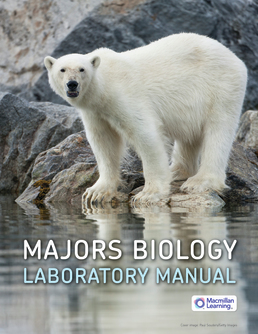
New Companion Lab Manual designed to align with Morris, How Life Works.
Summer 2025 Update
Engage Students Before Class—So They’re Ready to Engage In Class
Help students come to class prepared, curious, and ready to learn. Our latest digital learning tools are designed to boost comprehension outside of class—so in-class time can be spent on deeper discussions and active learning.
- New Interactive Animation ActivitiesThese 89 activities bring key biological processes to life with embedded questions that challenge students to think actively as they watch. Assign them before class to help students build a foundation—so they walk in ready to apply, analyze, and explore.
- Scientific Discoveries – Chapter 1
- DNA – Chapter 4
- Gene Expression – Chapter 5
- Cellular Respiration – Chapter 7
- Photosynthesis – Chapter 8
- Cell Cycle & Mitosis – Chapter 11
- Meiosis – Chapter 14
- Natural Selection – Chapter 20
- Adaptive Radiation – Chapter 21
- History of Life (Parts 1–4) – Chapter 22
- Ecological Succession – Chapter 45
- Carbon Cycle – Chapter 46
New Sequence Activities
These activities guide students through intricate biological processes in a step-by-step format—helping them visualize, organize, and understand systems that often feel overwhelming.
Featured topics include:
Updated to Match the Latest in Biological Science
We’ve applied the latest scientific research to ensure your students are learning from the most up-to-date content available. Recent updates reflect important advances across biology, taxonomy, climate science, and public health. These updates ensure your course reflects the latest thinking in biology—backed by current data and inclusive of groundbreaking research.
Key content updates include:
- Revised phylogenies:
- Fungi (Fig. 32.15
- Bryophytes (now recognized as monophyletic; Fig. 27.3)
- New data and classifications:
- Updated species counts for plants (Chapter 27)
- COVID-19 data refresh (Chapter 19)
- Climate data (Case 8, Chapter 48)
- Tuberculosis statistics (Chapter 48)
- Clostridium difficile reclassified as Clostridioides difficile(Case 5), with “C. diff” retained as a common name
- New scientific insights:
- Revised understanding of chromatin structure—30 nm fiber now widely considered an artifact (Chapter 12, Fig. 12.19)
- Expanded content on Asgard archaea, key to understanding eukaryotic origins (Chapter 24)
- Celebrating scientific contributions:
- New spotlights on Jane Goodall (Chapter 48)
Spring 2024 Updates:
- Two new Podcasts and Reflection assignments for Case 6 Beronda Montgomery on how the environment influences plant growth and Sheila Colla on protecting native insect pollinators. How Life Works Podcasts feature the contributions of a diverse group of scientists doing current research related to each of the cases.
- Primers are designed to help students develop the skills they need to be successful in their biology courses and beyond. The new AI primer will introduce students to AI concepts and ethics.
- New in-class activities were added for Chapter 22 on the History of Life, to help give students a sense of time and scale and Chapters 20 and 47 on the Great Bear Rainforest and Kermode Bear fur coloration.
- Improvements were made to in-class activities throughout the course.
Build Skills, Deepen Engagement, and Connect Biology to Real Life
How Life Works offers a dynamic way to teach biology. It helps students connect content and skills to their everyday lives. With its storytelling framework, intuitive visuals, and interactive Achieve courseware, this program supports conceptual understanding while promoting scientific thinking.
Skills development stays central, with expanded Skills Primers, including Carbon Chemistry and new support for electron transfer. These tools help students gain confidence with hard topics from the start. Guided Review Quizzes for every chapter help students identify gaps and focus their study time more effectively.
Engagement tools continue to evolve with greater flexibility and variety. Instructors can assign premade Sequence Games or create custom activities with the Sequence Activity Builder. These activities reinforce key biology concepts through interactive learning. Additional JeoParody games and expanded class activities support active learning, teamwork, and scientific reasoning. They cover topics like gene drive, mutation, complex traits, and development.
Together with write-to-learn activities, podcasts featuring diverse scientists, and a fully integrated Companion Lab Manual, these resources help create a more engaging, inclusive, and connected biology learning experience while streamlining course preparation and instruction.
Success Stories
Here are a few examples of how Achieve has helped instructors like you improve student preparedness, enhance their sense of belonging, and achieve course goals they set for themselves.
Prof. Kiandra Johnson, Spelman College
See how the resources in Achieve help you engage students before, during, and after class.
Prof. Jennifer Duncan
Use diagnostics in Achieve for a snapshot into cognitive and non-cognitive factors that may impact your students’ preparedness.
Prof. Ryan Elsenpeter
Here’s why educators who use Achieve would recommend it to their peers.
Instructor Resources
Instructor Resources
Access Test Bank
You need to sign in as a verified instructor to access the Test Bank.

Test Bank for Biology: How Life Works (Online Only)
James Morris; Daniel Hartl; Andrew Knoll; Robert Lue; Melissa Michael; Andrew Berry; Andrew Biewener; Brian Farrell; N. Michele Holbrook; Jessica Liu; Jean Heitz; Mark Hens; Elena Lozovsky; John Merrill; Randall Phillis; Debra Pires | Fourth Edition | ©2023 | ISBN:9781319387419
You've selected:
Click the E-mail Download Link button and we'll send you an e-mail at with links to download your instructor resources. You will also be able to download your resources anytime from within your account once ready. Please note there may be a delay in delivering your e-mail depending on the size of the files.
Warning! These materials are owned by Macmillan Learning or its licensors and are protected by copyright laws in the United States and other jurisdictions. Such materials may include a digital watermark that is linked to your name and email address in your Macmillan Learning account to identify the source of any materials used in an unauthorised way and prevent online piracy. These materials are being provided solely for instructional use by instructors who have adopted Macmillan Learning’s accompanying textbooks or online products for use by students in their courses. These materials may not be copied, distributed, sold, shared, posted online, or used, in print or electronic format, except in the limited circumstances set forth in the Macmillan Learning Terms of Use and any other reproduction or distribution is illegal. These materials may not be made publicly available under any circumstances. All other rights reserved. For more information about the use of your personal data including for the purposes of anti-piracy enforcement, please refer to Macmillan Learning's.Privacy Notice
Thank you!
Your download request has been received and your download link will be sent to .
Please note you could wait up to 30 to 60 minutes to receive your download e-mail depending on the number and size of the files. You will also be able to download your resources anytime from within your account once ready. We appreciate your patience while we process your request.
Check your inbox, trash, and spam folders for an e-mail from InstructorResources@macmillan.com.
If you do not receive your e-mail, please visit macmillanlearning.com/support.
FAQs
-
-
Are you a campus bookstore looking for ordering information?
MPS Order Search Tool (MOST) is a web-based purchase order tracking program that allows customers to view and track their purchases. No registration or special codes needed! Just enter your BILL-TO ACCT # and your ZIP CODE to track orders.
Canadian Stores: Please use only the first five digits/letters in your zip code on MOST.
Visit MOST, our online ordering system for booksellers: https://tracking.mpsvirginia.com/Login.aspx
Learn more about our Bookstore programs here: https://www.macmillanlearning.com/college/us/contact-us/booksellers
-
-
-
Our courses currently integrate with Canvas, Blackboard (Learn and Ultra), Brightspace, D2L, and Moodle. Click on the support documentation below to find out more details about the integration with each LMS.
Integrate Macmillan courses with Blackboard
Integrate Macmillan courses with Canvas
-
-
-
If you’re a verified instructor, you can request a free sample of our courseware, e-book, or print textbook to consider for use in your courses. Only registered and verified instructors can receive free print and digital samples, and they should not be sold to bookstores or book resellers. If you don't yet have an existing account with Macmillan Learning, it can take up to two business days to verify your status as an instructor. You can request a free sample from the right side of this product page by clicking on the "Request Instructor Sample" button or by contacting your rep. Learn more.
-
-
-
Sometimes also referred to as a spiral-bound or binder-ready textbook, loose-leaf textbooks are available to purchase. This three-hole punched, unbound version of the book costs less than a hardcover or paperback book.
-
-
-
Achieve (full course) includes our complete e-book, as well as online quizzing tools, multimedia assets, and iClicker active classroom manager.
Most Achieve Essentials courses do not include our e-books and adaptive quizzing.
Visit our comparison table for details: https://www.macmillanlearning.com/college/us/digital/achieve/compare
-
-
-
Achieve (full course) includes our complete e-book, as well as online quizzing tools, multimedia assets, and iClicker active classroom manager.
Achieve Read & Practice only includes our e-book and adaptive quizzing, and does not include instructor resources and assignable assessments. Read & Practice does integrate with LMS.
Visit our comparison table for details: https://www.macmillanlearning.com/college/us/digital/achieve/compare
-
-
-
We can help! Contact your representative to discuss your specific needs for your course. If our off-the-shelf course materials don’t quite hit the mark, we also offer custom solutions made to fit your needs.
-
ISBN:9781319381813
Access all your course tools in one place!
ISBN:9781319379803
Take notes, add highlights, and download our mobile-friendly e-books.
ISBN:9781319387396
Save money with our hole-punched, loose-leaf textbook.
FAQs
-
-
Are you a campus bookstore looking for ordering information?
MPS Order Search Tool (MOST) is a web-based purchase order tracking program that allows customers to view and track their purchases. No registration or special codes needed! Just enter your BILL-TO ACCT # and your ZIP CODE to track orders.
Canadian Stores: Please use only the first five digits/letters in your zip code on MOST.
Visit MOST, our online ordering system for booksellers: https://tracking.mpsvirginia.com/Login.aspx
Learn more about our Bookstore programs here: https://www.macmillanlearning.com/college/us/contact-us/booksellers
-
-
-
Our courses currently integrate with Canvas, Blackboard (Learn and Ultra), Brightspace, D2L, and Moodle. Click on the support documentation below to find out more details about the integration with each LMS.
Integrate Macmillan courses with Blackboard
Integrate Macmillan courses with Canvas
-
-
-
If you’re a verified instructor, you can request a free sample of our courseware, e-book, or print textbook to consider for use in your courses. Only registered and verified instructors can receive free print and digital samples, and they should not be sold to bookstores or book resellers. If you don't yet have an existing account with Macmillan Learning, it can take up to two business days to verify your status as an instructor. You can request a free sample from the right side of this product page by clicking on the "Request Instructor Sample" button or by contacting your rep. Learn more.
-
-
-
Sometimes also referred to as a spiral-bound or binder-ready textbook, loose-leaf textbooks are available to purchase. This three-hole punched, unbound version of the book costs less than a hardcover or paperback book.
-
-
-
Achieve (full course) includes our complete e-book, as well as online quizzing tools, multimedia assets, and iClicker active classroom manager.
Most Achieve Essentials courses do not include our e-books and adaptive quizzing.
Visit our comparison table for details: https://www.macmillanlearning.com/college/us/digital/achieve/compare
-
-
-
Achieve (full course) includes our complete e-book, as well as online quizzing tools, multimedia assets, and iClicker active classroom manager.
Achieve Read & Practice only includes our e-book and adaptive quizzing, and does not include instructor resources and assignable assessments. Read & Practice does integrate with LMS.
Visit our comparison table for details: https://www.macmillanlearning.com/college/us/digital/achieve/compare
-
-
-
We can help! Contact your representative to discuss your specific needs for your course. If our off-the-shelf course materials don’t quite hit the mark, we also offer custom solutions made to fit your needs.
-
Biology: How Life Works
How Life Works offers a dynamic way to teach biology. It helps students connect content and skills to their everyday lives. With its storytelling framework, intuitive visuals, and interactive Achieve courseware, this program supports conceptual understanding while promoting scientific thinking.
Skills development stays central, with expanded Skills Primers, including Carbon Chemistry and new support for electron transfer. These tools help students gain confidence with hard topics from the start. Guided Review Quizzes for every chapter help students identify gaps and focus their study time more effectively.
Engagement tools continue to evolve with greater flexibility and variety. Instructors can assign premade Sequence Games or create custom activities with the Sequence Activity Builder. These activities reinforce key biology concepts through interactive learning. Additional JeoParody games and expanded class activities support active learning, teamwork, and scientific reasoning. They cover topics like gene drive, mutation, complex traits, and development.
Together with write-to-learn activities, podcasts featuring diverse scientists, and a fully integrated Companion Lab Manual, these resources help create a more engaging, inclusive, and connected biology learning experience while streamlining course preparation and instruction.

These materials are owned by Macmillan Learning or its licensors and are protected by United States copyright law. They are being provided solely for evaluation purposes only by instructors who are considering adopting Macmillan Learning's textbooks or online products for use by students in their courses. These materials may not be copied, distributed, sold, shared, posted online, or used, in print or electronic format, except in the limited circumstances set forth in the Macmillan Learning Terms of Use and any other reproduction or distribution is illegal. These materials may not be made publicly available under any circumstances. All other rights reserved. © 2020 Macmillan Learning.
BY CLICKING ON THE SAMPLE CHAPTER LINK BELOW, YOU ARE AGREEING TO USE THESE MATERIALS ONLY IN ACCORDANCE WITH MACMILLAN LEARNING'S TERMS OF USE.
Select a file to view:
 Sample Achieve