


Page 36 - 2024-bfw-MyersAP4e-TE
P. 36
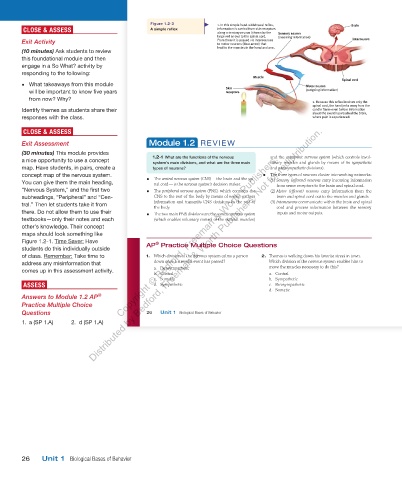
Figure 1.2-3          1. In this simple hand-withdrawal reflex,   Brain
               CLOSE & ASSESS                            A simple reflex       information is carried from skin receptors
                                                                               along a sensory neuron (shown by the
                                                                               large red arrow) to the spinal cord.  Sensory neuron
                                                                                                   (incoming information)
               Exit Activity                                                   From there it is passed via interneurons    Interneuron
                                                                               to motor neurons (blue arrow) that
                                                                               lead to the muscles in the hand and arm.
               (10 minutes) Ask students to review
               this foundational module and then
               engage in a So What? activity by
               responding to the following:
                                                                                          Muscle
                                                                                                                       Spinal cord
               •  What takeaways from this module                                                           Motor neuron
                 will be important to know five years                            Skin                       (outgoing information)
                                                                                 receptors
                 from now? Why?
                                                                                                              2. Because this reflex involves only the
                                                                                                              spinal cord, the hand jerks away from the
               Identify themes as students share their                                                        candle flame even before information
                                                                                                              about the event has reached the brain,
               responses with the class.                                                                      where pain is experienced.
                                      Distributed by Bedford, Freeman & Worth Publishers. Not for redistribution.
               CLOSE & ASSESS
               Exit Assessment                          Module 1.2  REVIEW
               (30 minutes) This module provides
               a nice opportunity to use a concept        1.2-1 What are the functions of the nervous   and the autonomic nervous system (which controls invol-
                                                                                                untary muscles and glands by means of its  sympathetic
                                                          system’s main divisions, and what are the three main
               map. Have students, in pairs, create a     types of neurons?                     and parasympathetic divisions).
               concept map of the nervous system.                                             •  The three types of neurons cluster into working networks:
               You can give them the main heading,      •  The central nervous system (CNS) — the brain and the spi-  (1)  Sensory (afferent) neurons carry incoming information
                                                          nal cord — is the nervous system’s decision maker.
                                                                                                  from sense receptors to the brain and spinal cord.
               “Nervous System,” and the first two      •  The peripheral nervous system (PNS), which connects the   (2)  Motor (efferent) neurons  carry information from the
               subheadings, “Peripheral” and “Cen-        CNS to the rest of the body by means of nerves, gathers   brain and spinal cord out to the muscles and glands.
               tral.” Then let students take it from      information and transmits CNS decisions to the rest of   (3)  Interneurons communicate within the brain and spinal
                                                          the body.
                                                                                                  cord  and  process  information  between  the  sensory
               there. Do not allow them to use their    •  The two main PNS divisions are the somatic nervous system     inputs and motor outputs.
               textbooks—only their notes and each        (which enables voluntary control of the skeletal muscles)
               other’s knowledge. Their concept
               maps should look something like  Copyright © Bedford, Freeman & Worth Publishers.
               Figure 1.2-1. Time Saver: Have           AP  Practice Multiple Choice Questions
                                                           ®
               students do this individually outside
               of class. Remember: Take time to         1.  Which division of the nervous system calms a person   2.  Thomas is walking down his favorite street in town.
               address any misinformation that            down once a stressful event has passed?  Which division of the nervous system enables him to
               comes up in this assessment activity.      a.  Parasympathetic                   move the muscles necessary to do this?
                                                          b.  Central                           a.  Central
                                                          c.  Somatic                           b.  Sympathetic
               ASSESS                                     d.  Sympathetic                       c.  Parasympathetic
                                                                                                d.  Somatic
               Answers to Module 1.2 AP ®
               Practice Multiple Choice
               Questions                                26   Unit 1  Biological Bases of Behavior
               1.  a (SP 1.A)  2.  d (SP 1.A)


                                                  03_myersAPpsychology4e_28116_ch01_002_163.indd   26                               15/12/23   9:21 AM


               26   Unit 1  Biological Bases of Behavior


          03_HammerTE4e_47547_ch01_2a_163_4pp.indd   26                                                                         07/02/24   5:18 PM

