


Page 18 - 2021-bfw-SPA-4e-TE-sample.indd
P. 18
LESSON 2.2  •   Transforming Data  99

                    EXAMPLE

                        How wide is this room?
                        Effect of adding/subtracting a constant


                               PROBLEM:   Soon after the metric system was introduced in   NoSystem images/E+/Getty Images   Lesson 2.2
                        Australia, a group of students was asked to guess the width
                      of their classroom to the nearest meter. Here is a dotplot of
                      the data along with some numerical summaries.
                           The actual width of the room was 13 meters. We can
                      examine the distribution of students’ errors by defining

                      a new variable as follows:   errorguess 13=  −    . Note
                      that a negative value for error indicates that a
                        student’s guess for the width of the room was
                      too small.
                           (C) 2021 BFW Publishers -- for review purposes only.


                            (a)   What shape would the distribution of error have?
                                                         0    10   20   30   40
                          (b)    Find the mean and median of the distribution
                        of error.                          −      Guess (m)
                          (c)   Find the standard deviation and interquartile   n  x  s x Min  Q 1 Med  Q 3 Max IQR  Range

                        range of the distribution of error.        Guess 44 16.02  7.14  8  11  15  17 40  6  32
                         SOLUTION:

                         (a)   The same shape as the original distribution of guesses: skewed       Subtracting 13 from each data value doesn’t
                        to the right with two distinct peaks.     change the shape of the distribution.
                        (b)      Mean:16.02 −13 =3.02meters;         It is not a surprise that the mean is greater than
                                                         the median in this right-skewed distribution.
                              −
                                =
                         M    edian:15 13 2meters.

                        (c)   Standard deviation: 7.14 meters;  IQR : 6 meters.            Subtracting a constant doesn’t affect measures
                                                         of variability.
                                                                  FOR PRACTICE     TRY EXERCISE 5.

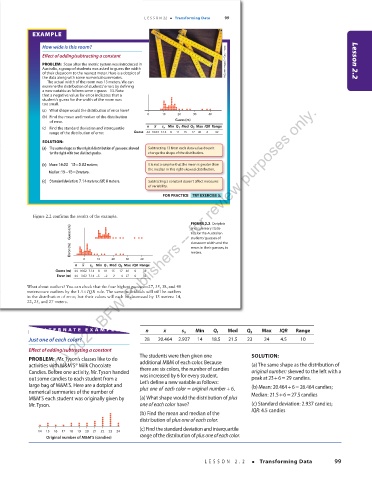
                       Figure 2.2  confirms the results of the example.
                                                                       FIGURE   2.2     Dotplots
                               Guess (m)  d d d d d d d d d d d d d d d d d d d d d d d d d d  and summary statis-
                                                                       tics for the Australian
                                                                       students’ guesses of
                                        d
                                        d
                                            d
                                       d
                                             d
                                              d
                                           d
                                           d
                                            d
                                          d
                                         d
                                         d
                                          d
                                                    d
                                                      d
                                                d
                                               d
                                                       d
                                                                       classroom width and the
                                    d
                               Error (m)  ddddddddddd dd  dd  d  d d   errors in their guesses, in
                                    d
                                  d
                                    d
                                  d
                                    d
                                    dd
                                  dd
                                                                       meters.
                                  dd ddddd
                                  ddddddddd
                                   0    10   20   30  40
                                 n  − x  s x Min  Q 1 Med  Q 3 Max IQR  Range
                          Guess (m) 44 16.02  7.14  8  11  15  17 40  6  32
                           Error (m)  44  3.02  7.14 –5  –2  2  4 27  6  32
                       What about outliers? You can check that the four highest guesses—27, 35, 38, and 40
                 meters—are outliers by the   1.5 × IQR rule. The same individuals will still be outliers


                 in the distribution of error, but their values will each be decreased by 13 meters: 14,
                 22, 25, and 27 meters.
        03_StarnesSPA4e_24432_ch02_088_153.indd   99                              07/09/20   1:54 PM
                     AL TERNA TE  EX AMPLE              n     x     s x  Min   Q 1  Med   Q 3  Max   IQR  Range
                 Just one of each color?                28  20.464  2.937  14  18.5  21.5  23   24   4.5    10
                 Effect of adding/subtracting a constant
                                                      The students were then given one      SOLUTION:
                 PROBLEM:  Mr. Tyson’s classes like to do
                 activities with M&M’S® Milk Chocolate   additional M&M of each color. Because   (a) The same shape as the distribution of
                 Candies. Before one activity, Mr. Tyson handed   there are six colors, the number of candies   original number: skewed to the left with a
                                                                                                   +=
                 out some candies to each student from a   was increased by 6 for every student.   peak at 236 29 candies.
                 large bag of M&M’S. Here are a dotplot and   Let’s define a new variable as follows:  (b) Mean: 20.464 6 26.464 candies;+=
                                                                                   +
                 numerical summaries of the number of   plusone of each color  = originalnumber 6.  Median: 21.56 27.5candies
                                                                                                     +=
                 M&M’S each student was originally given by   (a) What shape would the distribution of plus
                 Mr. Tyson.                           one of each color have?               (c) Standard deviation: 2.937 candies;
                                                      (b) Find the mean and median of the   IQR: 4.5 candies
                                                      distribution of plus one of each color.
                                                      (c) Find the standard deviation and interquartile
                    14  15  16  17  18  19  20  21  22  23  24
                       Original number of M&M’S (candies)  range of the distribution of plus one of each color.
                                                                            LESSON 2.2   •  Transforming Data          99
          03_TysonTEspa4e_25177_ch02_088_153_4pp.indd   99                                                             10/11/20   7:43 PM

