Experience the Science: Assignable Simulations
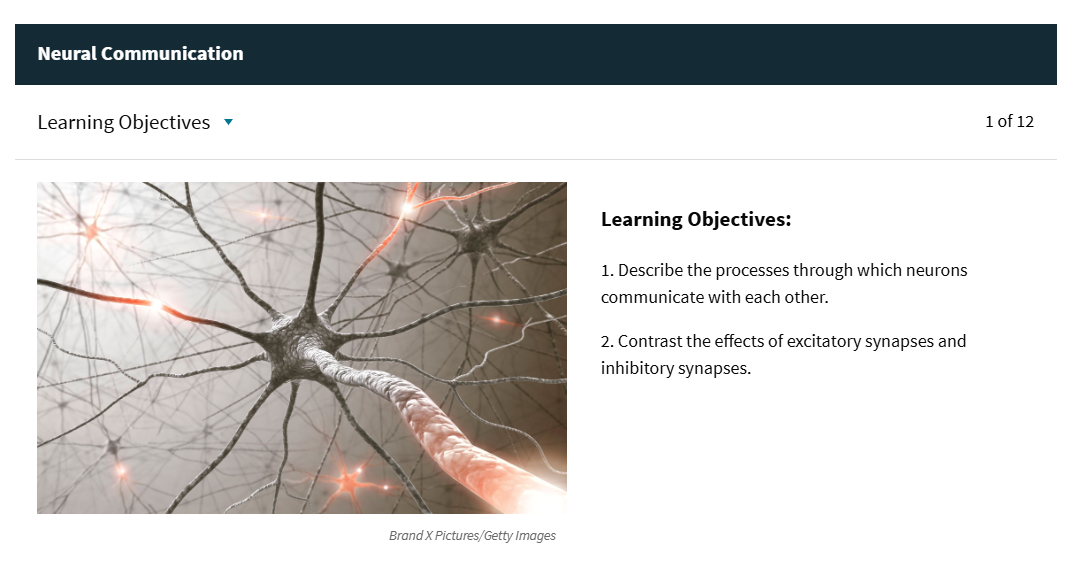
Concept Practice Tutorials
Master Core Psychology Concepts through Practice and Application with 60 interactive tutorials which bridge the gap between theory and reality. These brief, hands-on activities empower students to master complex psychological concepts through a mix of guided practice and independent problem-solving.
- Hands-On: Connects abstract theory to relatable, real-world scenarios.
- Reinforcing: Specifically designed to support the practice and retention of core ideas.
- Flexible: Easily integrates into any course format to reinforce the curriculum.
Psych Sim: Interactive Psychology Simulations
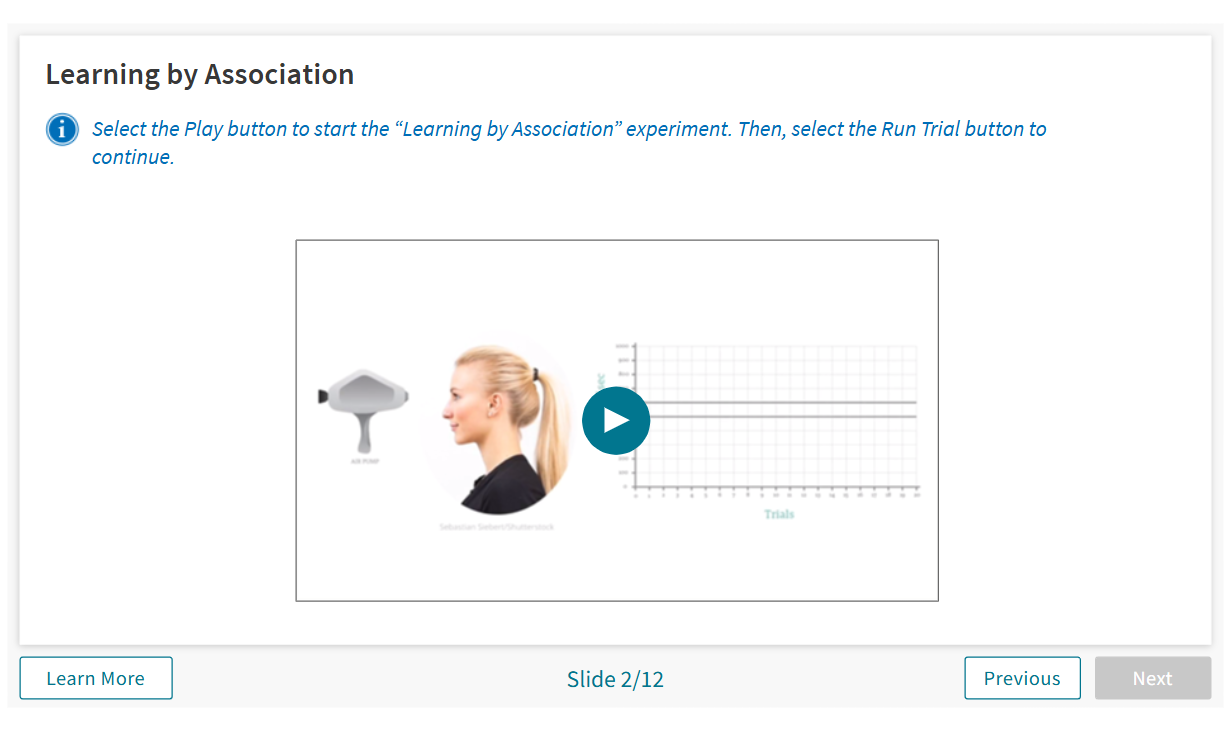
Psych Sim brings abstract concepts to life with 17 interactive, scenario-based simulations. By engaging in digital experiments and guided tutorials, students move beyond the textbook to experience psychology in action.
- Immersive Learning: Covers core topics like memory, learning, and social influence through high-impact visual tasks.
- Critical Thinking: Scenario-based activities challenge students to apply psychological theory to real-world situations.
- Flexible Assessment: Includes optional, assignable quizzes to track student mastery and comprehension.
Neuroscience Learning Modules
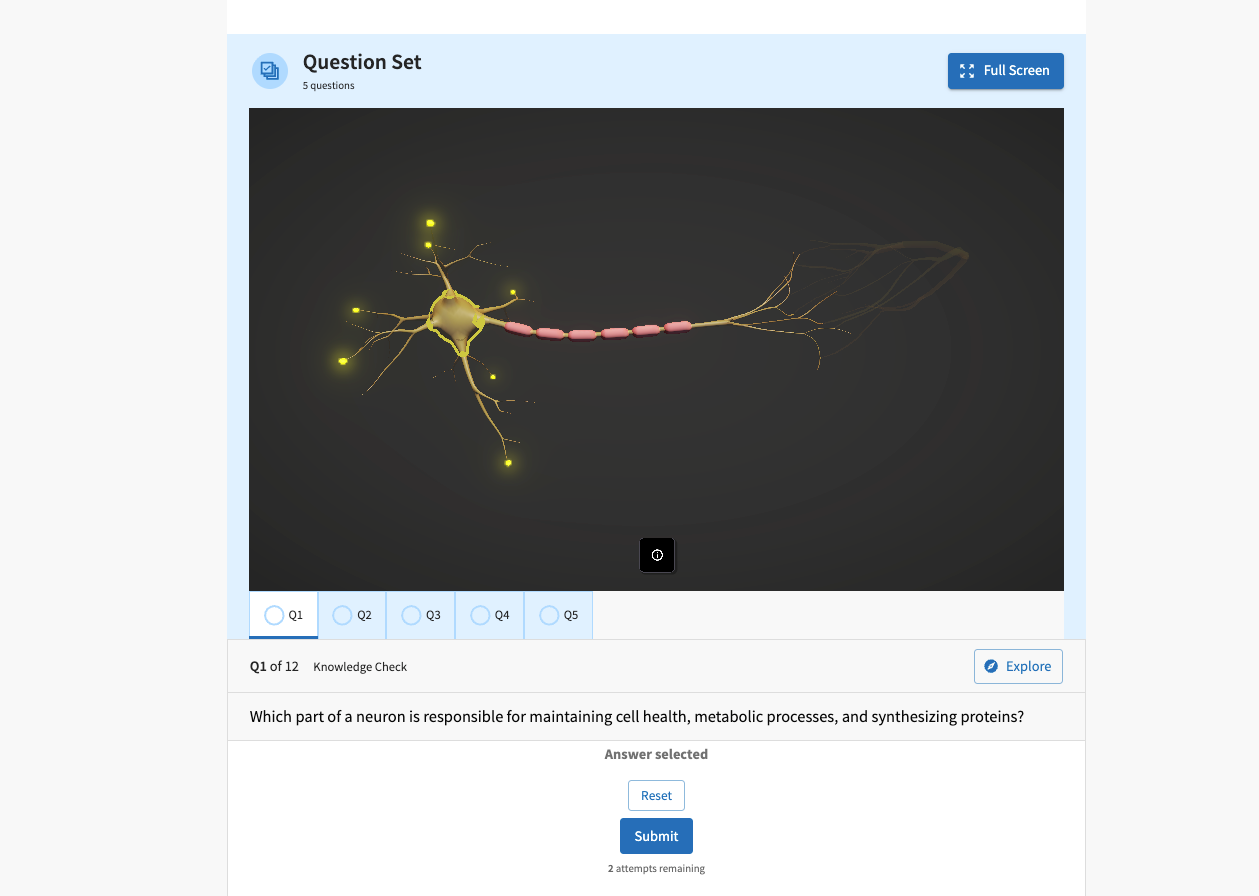
Many introductory psychology students find neuroscience intimidating. To make these concepts more approachable, we are developing an interactive “quest through the brain” that uses 3D models, embedded assessment, and real-world application to help students engage with foundational neuroscience concepts and apply them to behavioral, psychological, and everyday contexts.
The first activity, Exploring the Structure of the Neuron, will be available this summer in Achieve. Designed to help students build a foundational understanding of neuron anatomy and physiology, this interactive learning activity combines a 3D neuron model with targeted assessment questions that encourage students to check their understanding and apply key concepts.
Through an immersive, interactive experience, students will:
- Identify and understand the structure of a neuron, including its key parts and functions.
- Explore how neuron structure supports neural function and communication within the nervous system.
- Apply their knowledge of neurons to behavioral, psychological, and real-world examples, strengthening connections between biological processes and human behavior.
This neuron activity will be the base for more interactive neuroscience learning experiences. These experiences will build students’ confidence and deepen their understanding.