


Page 162 - 2024-bfw-MyersAP4e-TE
P. 162
Gender, age, and experience influence our
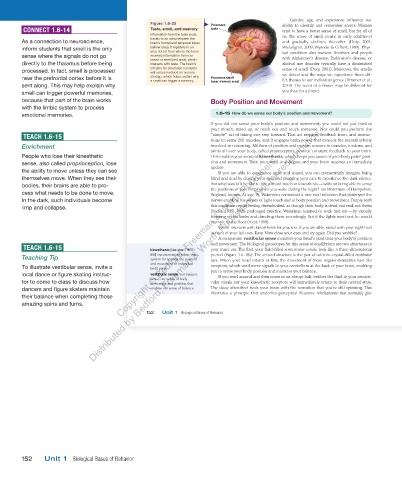
                                                                   Figure   1.6-25    Processes     ability to identify and remember scents.  Women
               CONNECT 1.6-14                              Taste, smell, and memory   taste         tend to have a better sense of smell, but for all of
                                                         Information from the taste buds            us, the sense of smell peaks in early adulthood
               As a connection to neuroscience,          travels to an area between the             and gradually declines thereafter ( Doty, 2001 ;
                                                         brain’s frontal and temporal lobes
               inform students that smell is the only    (yellow area). It registers in an            Wickelgren, 2009 ;  Wysocki & Gilbert, 1989 ). Phys-
                                                         area not far from where the brain
               sense where the signals do not go         receives information from our              ical condition also matters: Smokers and people
                                                                                                    with Alzheimer’s disease, Parkinson’s disease, or
               directly to the thalamus before being     sense of smell (red area), which           alcohol use disorder typically have a diminished
                                                         interacts with taste. The brain’s
               processed. In fact, smell is processed    circuitry for smell also connects          sense of smell ( Doty, 2001 ). Moreover, the smells
                                                         with areas involved in memory
               near the prefrontal cortex before it is   storage, which helps explain why   Processes smell  we detect and the ways we experience them dif-
                                                                                                    fer, thanks to our individual genes ( Trimmer et al.,
                                                         a smell can trigger a memory.

                                                                             (near memory area)
               sent along. This may help explain why                                                2019 ). The scent of a flower may be different for
               smell can trigger powerful memories,                                                 you than for a friend.
               because that part of the brain works                                Body Position and Movement
               with the limbic system to process
                                                                                    How do we sense our body’s position and movement?


                                                                                          1.6-15
               emotional memories.                                                        1.6-15   How do we sense our body’s position and movement?
                                                                               If you did not sense your body’s position and movement, you could not put food in
                                                                             your mouth, stand up, or reach out and touch someone. Nor could you perform the
               TEACH 1.6-15                                                    “simple” act of taking one step forward. That act requires feedback from, and instruc-
                                                                             tions to, some 200 muscles, and it engages brain power that exceeds the mental activity
               Enrichment                                                    involved in  reasoning. Millions of position and motion sensors in muscles, tendons, and
                                                                             joints all over your body, called  proprioceptors,  provide constant feedback to your brain.
                                               Copyright © Bedford, Freeman & Worth Publishers.
               People who lose their kinesthetic                             This enables your sense of    kinesthesis    which keeps you aware of your body parts’ posi-

                                                                                                    ,
               sense, also called proprioception, lose                       tion and movement. Twist your wrist one degree and your brain receives an immediate
               the ability to move unless they can see                       update.
                                                                                 If you are able to experience sight and sound, you can momentarily imagine being
               themselves move. When they see their                          blind and deaf by closing your eyes and plugging your ears to experience the dark silence.
               bodies, their brains are able to pro-                         But what would it be like to live without touch or kinesthesis — without being able to sense
               cess what needs to be done to move.                           the positions of your limbs when you wake during the night? Ian Waterman of Hampshire,
                                                                             England, knows. At age 19, Waterman contracted a rare viral infection that destroyed the
               In the dark, such individuals become                          nerves enabling his senses of light touch  and  of body position and movement. People with
               limp and collapse.                                            this condition report feeling disembodied, as though their body is dead, not real, not theirs
                                                                             ( Sacks, 1985 ). With prolonged practice, Waterman learned to walk and eat — by visually
                                                                             focusing on his limbs and directing them accordingly. But if the lights went out, he would
                                                                             crumple to the floor ( Azar, 1998 ).
                                                                                 Vision interacts with kinesthesis for you, too. If you are able, stand with your right heel
                                                                             in front of your left toes. Easy. Now close your eyes and try again. Did you wobble?
                                                                                 A companion    vestibular sense   monitors your head’s (and thus your body’s) position
                                                                             and movement. The biological gyroscopes for this sense of equilibrium are two structures in
               TEACH 1.6-15           Distributed by Bedford, Freeman & Worth Publishers. Not for redistribution.
                                                                             your inner ear. The first, your fluid-filled  semicircular canals,  look like a three-dimensional
                                                               kinesthesis      [kin-ehs-THEE-

               Teaching Tip                              sis] our movement sense; our   pretzel ( Figure 1.6-18a ). The second structure is the pair of calcium-crystal–filled  vestibular
                                                         system for sensing the position

                                                                             sacs. When your head rotates or tilts, the movement of these organs stimulates hair-like
                                                         and movement of individual
               To illustrate vestibular sense, invite a   body parts.        receptors, which send nerve signals to your cerebellum at the back of your brain, enabling
               local dance or figure skating instruc-       vestibular sense       our balance   you to sense your body position and maintain your balance.
                                                                                 If you twirl around and then come to an abrupt halt, neither the fluid in your semicir-
               tor to come to class to discuss how       sense; our sense of body   cular canals nor your kinesthetic receptors will immediately return to their neutral state.
                                                         movement and position that
               dancers and figure skaters maintain       enables our sense of balance.     The dizzy aftereffect fools your brain with the sensation that you’re still spinning. This
               their balance when completing those                           illustrates a principle that underlies perceptual illusions:  Mechanisms that normally give
               amazing spins and turns.
                                                        152   Unit 1  Biological Bases of Behavior
                                                  03_myersAPpsychology4e_28116_ch01_002_163.indd   152                              15/12/23   9:27 AM


               152   Unit 1  Biological Bases of Behavior


          03_HammerTE4e_47547_ch01_2a_163_4pp.indd   152                                                                        07/02/24   5:30 PM

