


Page 79 - 2024-bfw-MyersAP4e-TE
P. 79
Module 1.4b

                    The Hippocampus
                   The   hippocampus  is a curved brain structure that pro-                          TEACH 1.4-6

                 cesses conscious, explicit memories. Humans who lose
                 their hippocampus to surgery or injury also lose their                              Teaching Tip
                 ability to form new memories of facts and events ( Clark
                 & Maguire, 2016 ). Those who survive a hippocampal brain                            Students often confuse the names of the
                 tumor in childhood struggle to remember new informa-                                hypothalamus and the hippocampus.
                 tion in adulthood ( Jayakar et al., 2015 ). National Football                       Help them use mnemonic devices so
                 League (NFL) players who experience one or more loss-of-
                 consciousness concussions may later have a shrunken                                 that they don’t rely on acoustic encod-
                 hippocampus  and  poor  memory  (Strain  et  al.,  2015;                            ing alone. One interesting mnemonic
                   Tharmaratnam et al., 2018). Hippocampus size and  function
                 decrease as we grow older, which furthers  cognitive decline                 Elise Amendola/AP Images  has students  imagining a hippo sitting
                 ( O’Callaghan et al., 2019 ; see Module 3.2). Modules 2.5 and                       around a campfire telling stories—a vivid
                 2.7 explain how our two-track mind uses the hippocampus                             image of creating an episodic memory—

                 to process our memories.            Are football players’ brains protected?  When researchers analyzed the
                                                     brains of 111 deceased National Football League players, 99 percent showed
                                           * * *     signs of degeneration related to frequent head trauma ( Mez et al., 2017 . In 2017,   which is what the hippocampus is
                                                                                      )
                                                     NFL player Aaron Hernandez (#81) died by suicide while imprisoned for murder.   responsible for in the brain. Warning:
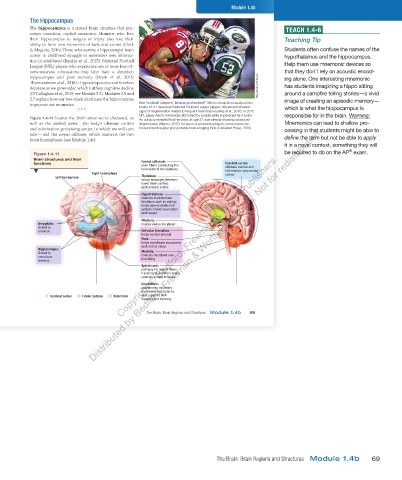
                         Figure 1.4-11  locates the brain areas we’ve discussed, as   An autopsy revealed that his brain, at age 27, was already showing advanced


                 well as the  cerebral cortex — the body’s ultimate control   degeneration ( Kilgore, 2017 . In hopes of protecting players, some teams use   Mnemonics can lead to shallow pro-
                                                                  )
                                      Distributed by Bedford, Freeman & Worth Publishers. Not for redistribution.
                 and information-processing center, to which we will turn   more protective gear and portable brain-imaging tools ( Canadian Press, 2018 .  )      cessing in that students might be able to

                 next — and  the   corpus  callosum,  which  connects  the  two                      define the term but not be able to apply
                 brain hemispheres (see Module 1.4c).
                                                                                                     it in a novel context, something they will
                                                                                                                          ®
                                               Copyright © Bedford, Freeman & Worth Publishers.
                             Figure   1.4-11                                                         be required to do on the AP  exam.
                     Brain structures and their       Corpus callosum:
                   functions                                                     Cerebral cortex:
                                                      axon fibers connecting the  ultimate control and
                                                      two cerebral hemispheres   information-processing
                                      Right hemisphere                           center
                          Left hemisphere             Thalamus:
                                                      relays messages between
                                                      lower brain centers
                                                      and cerebral cortex
                                                      Hypothalamus:
                                                      controls maintenance
                                                      functions such as eating;
                                                      helps govern endocrine
                                                      system; linked to emotion
                                                      and reward
                                                      Pituitary:
                    Amygdala:                         master endocrine gland
                    linked to
                    emotion                           Reticular formation:
                                                      helps control arousal
                                                      Pons:
                                                      helps coordinate movement
                                                      and control sleep
                    Hippocampus:
                    linked to                         Medulla:
                                                      controls heartbeat and
                    conscious                         breathing
                    memory
                                                      Spinal cord:
                                                      pathway for neural fibers
                                                      traveling to and from brain;
                                                      controls simple reflexes
                                                      Cerebellum:
                                                      coordinates voluntary
                                                      movement and balance,
                        Cerebral cortex  Limbic system  Brainstem  and supports skill
                                                      learning and memory
                                                        The Brain: Brain Regions and Structures  Module 1.4b   69
         03_myersAPpsychology4e_28116_ch01_002_163.indd   69                              15/12/23   9:23 AM


                                                                              The Brain: Brain Regions and Structures Module 1.4b   69


          03_HammerTE4e_47547_ch01_2a_163_4pp.indd   69                                                                         07/02/24   5:22 PM

