


Your College Experience
Fourteenth Edition
The development of Your College Experience, Fourteenth Edition drew inspiration from the trailblazing work of its author, John N. Gardner, who is universally recognized as one of the country's leading educators for his role in initiating and orchestrating an international reform movement to make the first year of college impactful, inclusive, and positive for all students—a concept he coined "the first-year experience." For the new edition, Gardner and co-author Betsy Barefoot partnered with the Editorial Board for diversity, equity, inclusion, and culturally responsive and sustaining (DEI+CRS) pedagogy. The result is a new edition that makes numerous updates to the coverage, tone, and photo program of this text. These changes help all college students implement the strategies in this textbook to achieve success and embrace diversity and inclusion.

The First Year Seminar and Social Justice
Your College Experience supports and aligns with the historical aim of the First Year Seminar course for which it is designed. Watch John and Betsy’s presentation on the history and role of the first year seminar at the Florida Student Success Summit in March 2019:
We would argue that the role of the first year seminar is as it’s always been: ...to help students adjust to the changing needs they have and the needs of American society and the characteristics of their institutions. There’s been this massive change since 1965, [with] the Great Society and the higher education act, to make institutions work for students for whom the institutions were not designed. That is a major role of the first-year seminar. The first-year seminar is all about the support of the march to social justice. Is that clear? That’s what this is about.
—John N. Gardner, co-author of Your College Experience
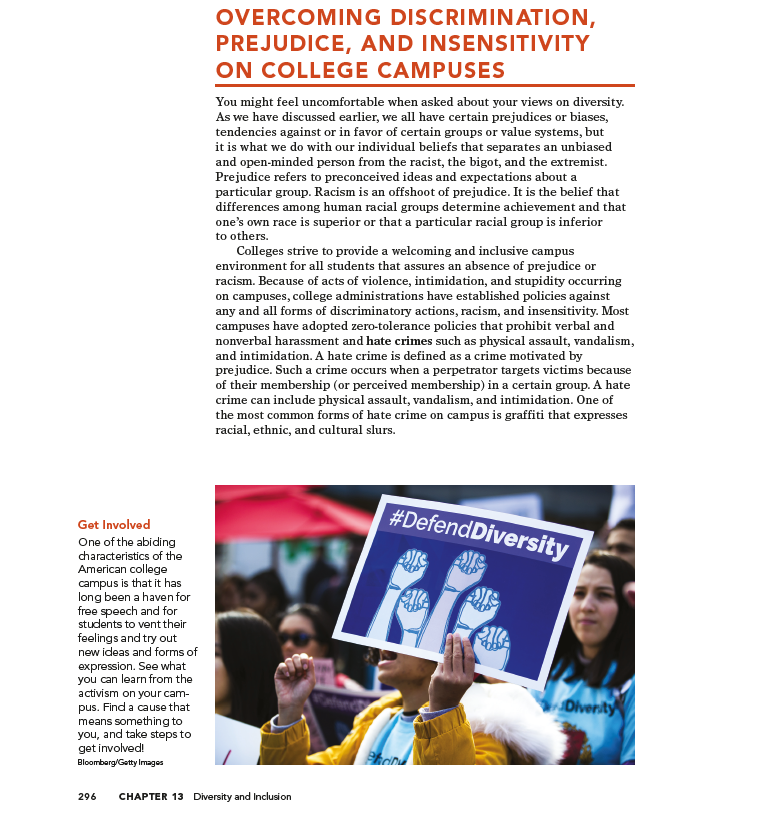
Editorial Board Review
Following it’s trailblazing work on Choices & Connections, the Editorial Board reconvened for a second term to guide the development of Your College Experience, Fourteenth Edition, at the invitation and support of the authors and development editor Melanie McFadyen. With the guidance of the Editorial Board, the team took a careful look, page by page, at the text and photos throughout Your College Experience to ensure that the examples and content reflect the perspectives and experiences of all students who will use the book.
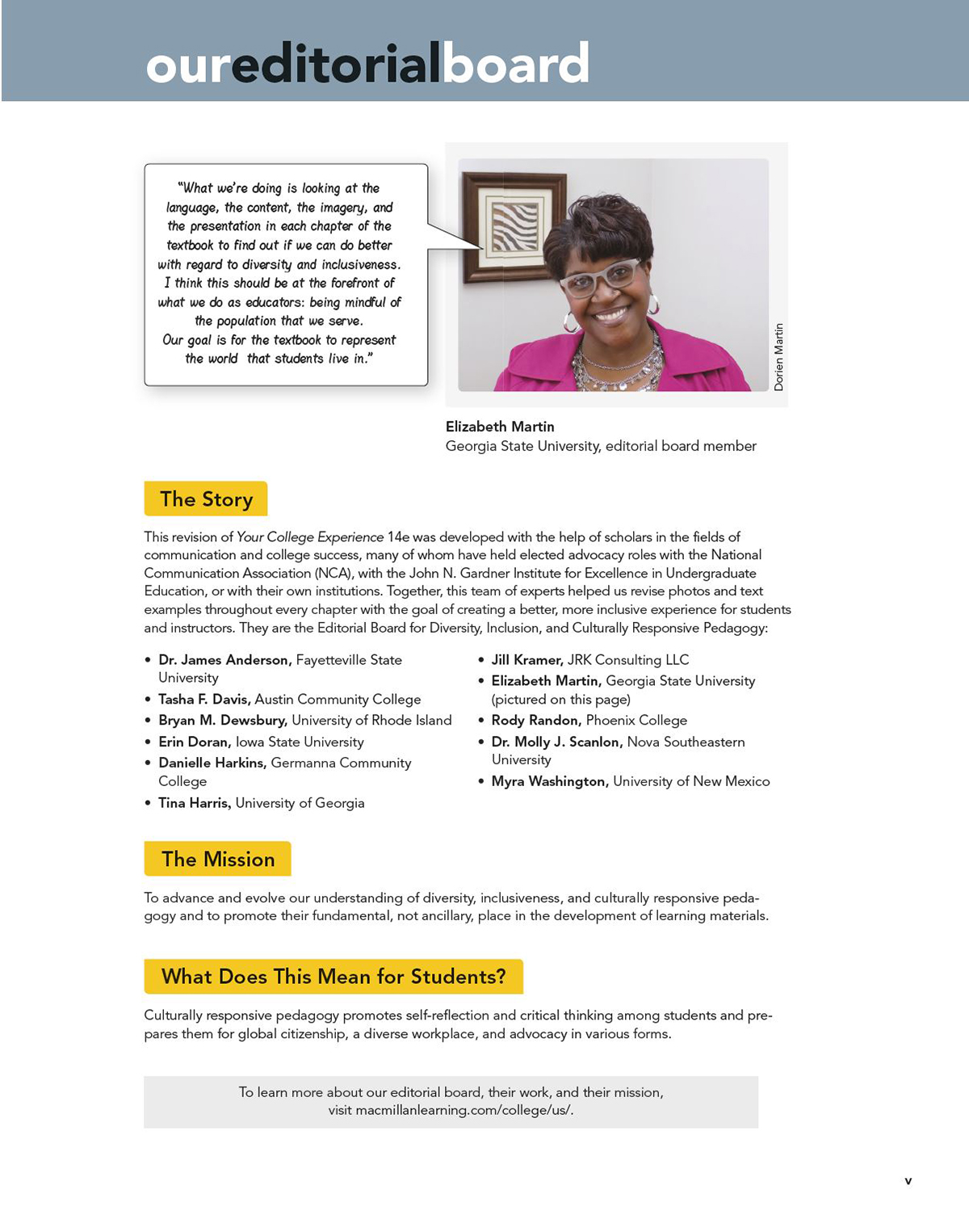
Photos Representing Diversity
Each chapter of Your College Experience includes a case study of a student who models how to overcome a common challenge in the first year of college. For the new edition, the development editor Melanie McFadyen worked with the board and the authors to make these case studies more representative of the diversity of college students. The result is that students will find seven new faces in the text. (See the accompanying images of all fifteen faces of these students.) In addition, many photos throughout the text have been replaced, correcting a prior bias that had leaned toward white, male, and able-bodied students.
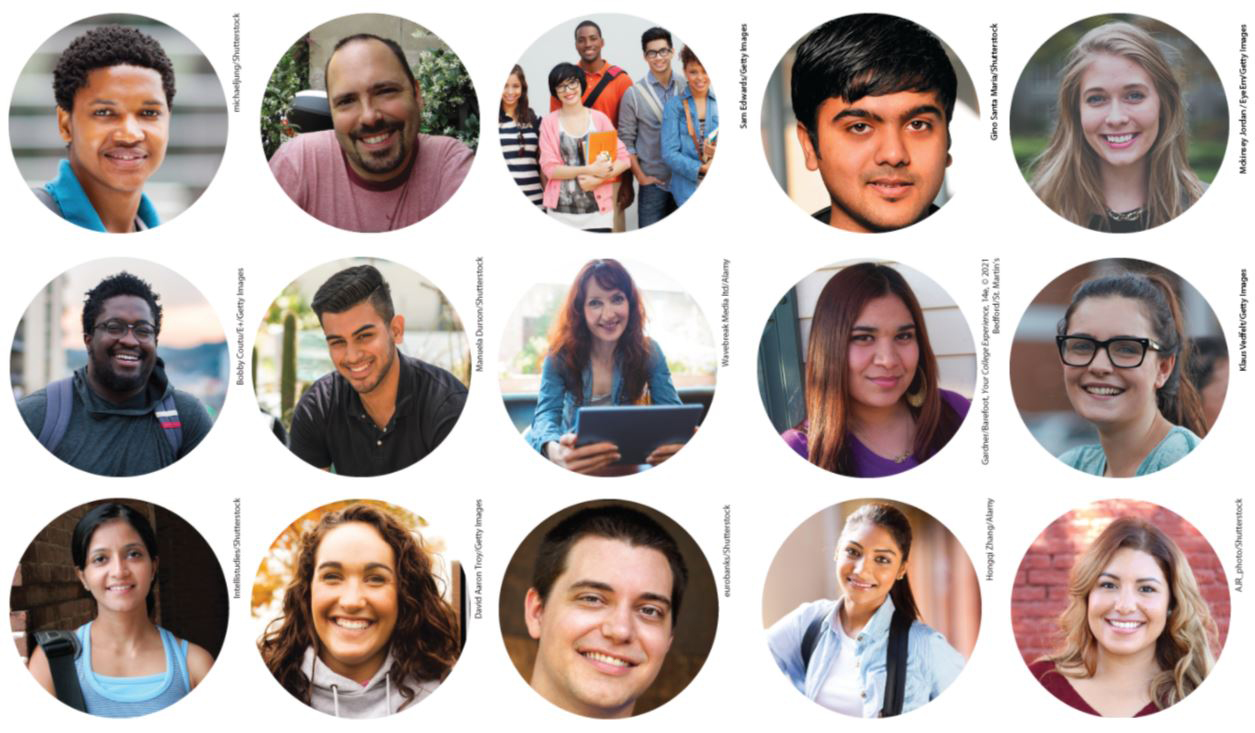
Photos Promoting Equity
The board’s review helped point out a pattern in academic stock images of white male professors or figures standing, leaning over, or pointing something out to women and/or students of color. Please see the accompanying example of how we replaced one such image with another of students sitting on an equal level. Note how in the new image, the power dynamic between the two subjects is more equitable.
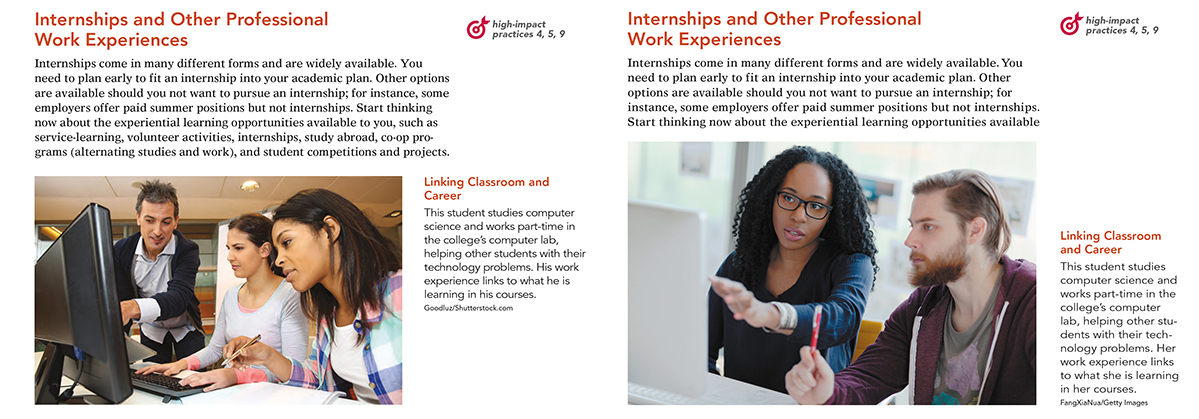
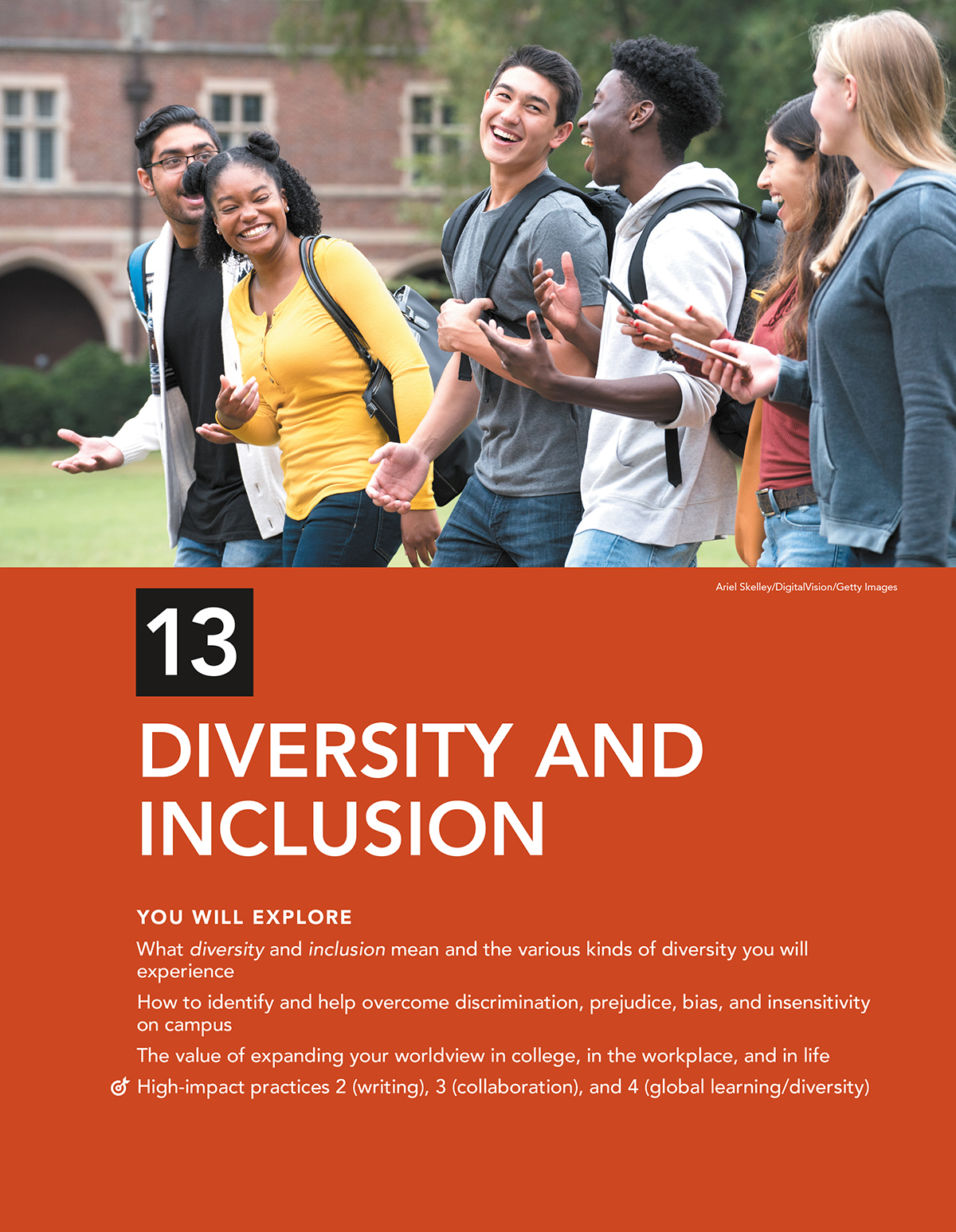
Photos Modeling Inclusion
One of the things we learned from our work with the Editorial Board is that just because a photo includes a diverse representation of students doesn’t mean it is positively representing them in an inclusive way. For example, a photo may show one or more subjects who are isolated, not interacting, and/or marginalized. For the Fourteenth Edition, we worked with the Editorial Board to replace photos with new ones that better illustrate inclusion. The photo shown here is one of the new ones chosen. Note how the students are walking together, engaging with each other—even the ones at the periphery of the group—and laughing together in what seems like a positive interaction. The pedagogy behind this photo selection is to model for the student that diversity leads to positive outcomes when we are inclusive.
Combating Bias
The Editorial Board also suggested new figures that would help illustrate the main points of the text. Here see an example of a new figure we’ve added to the text, Figure 13.1: The Pyramid of Hate. This figure illustrates the different levels of bias, hate, and oppression, organized in escalating levels of attitudes and behaviors that grow in complexity from bottom to top. This figure is an integral new feature of the “Diversity and Inclusion” chapter and the updated section on “Bias, Stereotyping, and Microaggressions.”

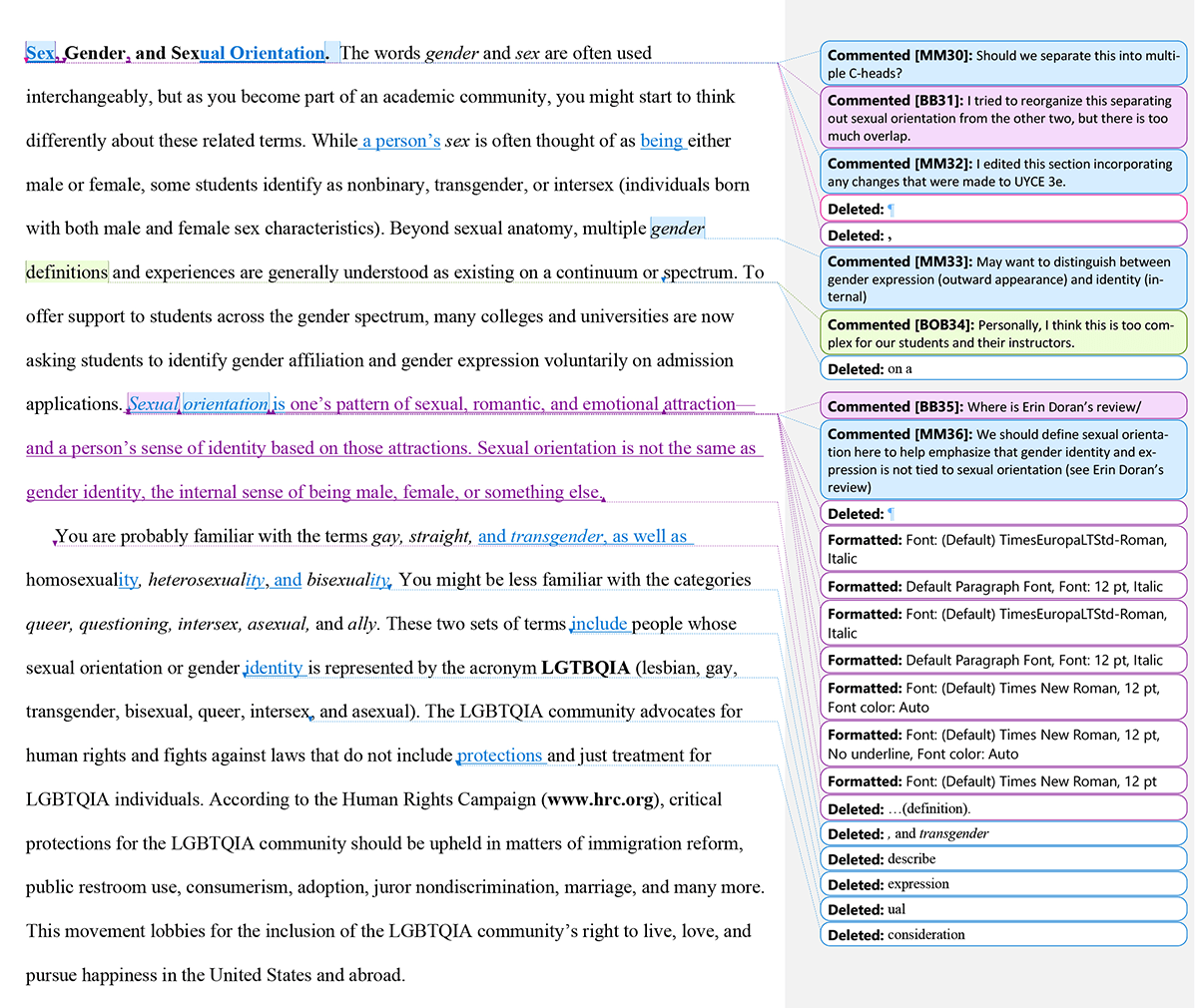
Gender Coverage
In addition to looking at photos, the Editorial Board gave feedback on the text. In Chapter 13, one section discussed sex and gender. Several Editorial Board members pointed out that as the language on these topics has evolved, we need to update our language in the text as well.
Pictured on the left is a section of actual manuscript from Your College Experience, Fourteenth Edition, with tracked changes by the authors and editor. The Editorial Board helped us make text changes like this throughout every chapter, ensuring that diverse perspectives are represented.
The Whole Student: Wellness
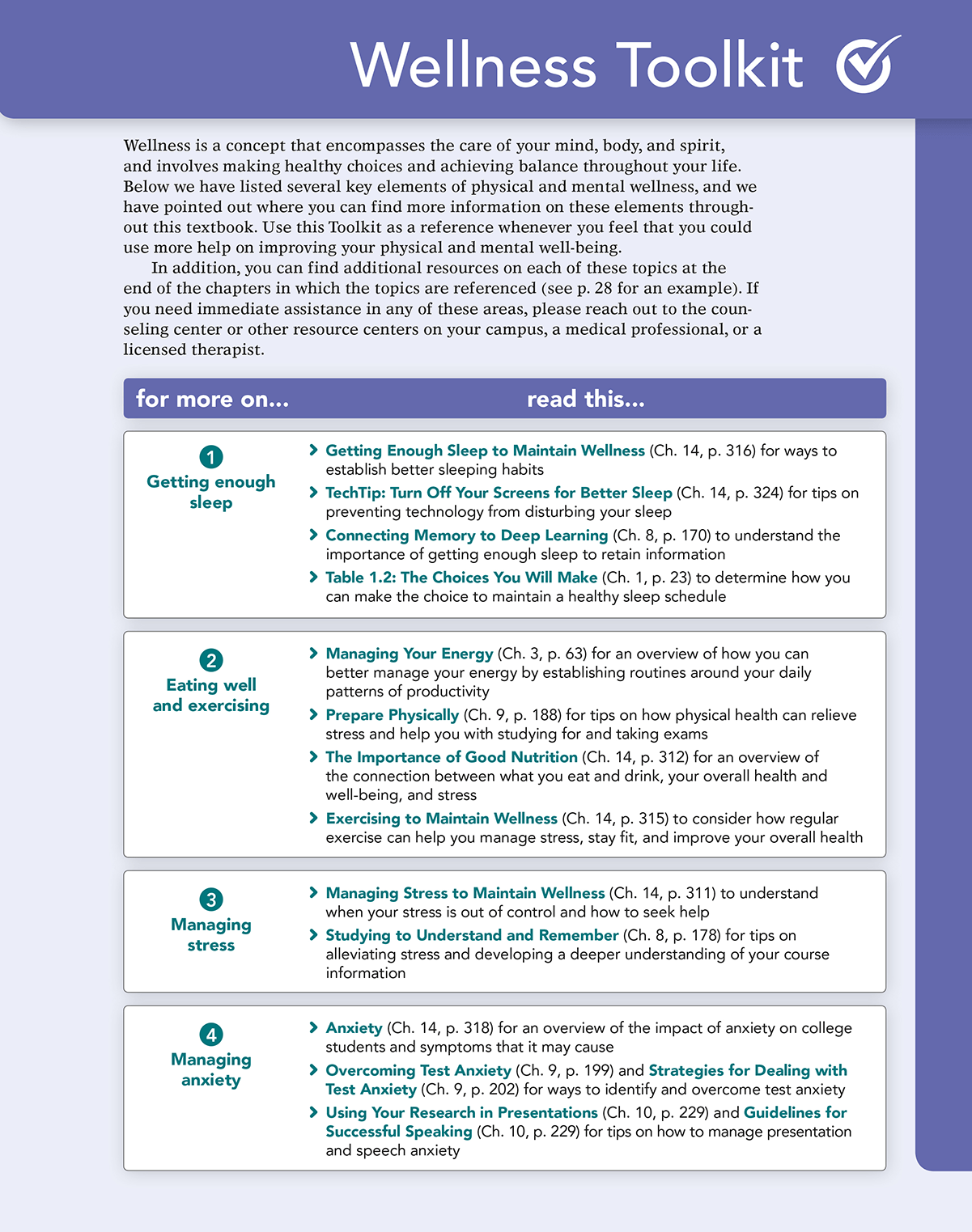
Your College Experience, Fourteenth Edition, features updated coverage on mental health not just in Chapter 14: Wellness, but throughout the text. Our Editorial Board emphasized the importance of students’ mental health and emotional welfare, and the broad range of factors that can impact their health. Our authors, editors, and contributor, Dr. Warrenetta C. Mann, all helped update this coverage.
To reflect on these changes, the Wellness Toolkit (pictured to the right) provides students with quick and easy access to more information on the factors that can impact their physical and mental health, including sleep, nutrition, stress and anxiety, depression and loneliness, homesickness, and alcohol and other substances. Every chapter also provides students with resources to learn more and get whatever help they may need.
Student Voices: Diversity
The LaunchPad for Your College Experience, Thirteenth Edition contains a video activity to help students reflect on how words, actions, and beliefs affect ourselves and others. The video includes interviews with actual students as well as the director of a first year experience program. The video is accompanied by a set of reflection questions that can be assigned or used to frame a class conversation to promote social belonging, diversity, and inclusion.
New Contributor:
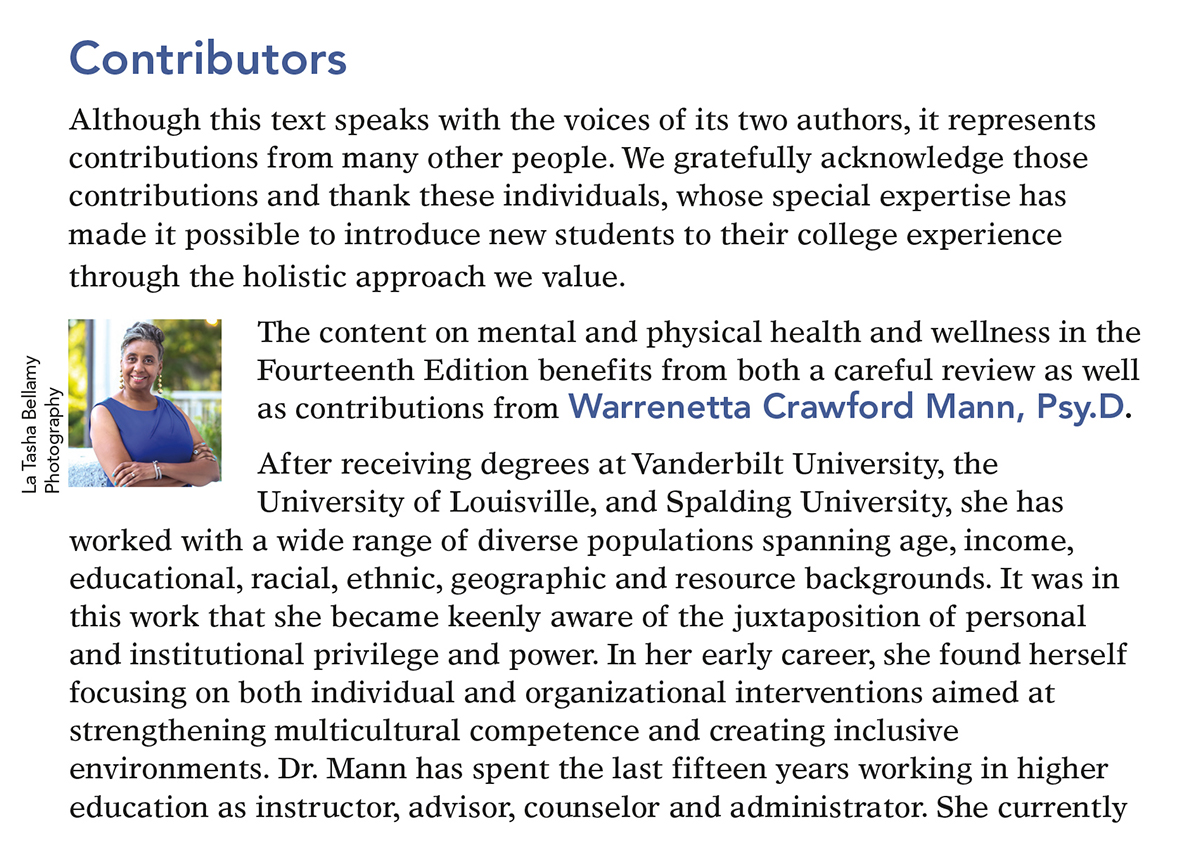
Dr. Warrenetta C. Mann
The Fourteenth Edition welcomes a new voice in the text: Dr. Warrenetta C. Mann, the Director of the University Counseling Center at Wake Forest University. Dr. Mann drew on her expertise in mental health to contribute new coverage of body positivity, anxiety, loneliness, and homesickness.

Author Quotes
We want to offer our sincere thanks to the members of the Editorial Board for helping keep us attuned to the diversity in our classrooms and how, within a college success framework, we can address the particular issues and diverse needs that first-year students bring with them to college.
-Betsy Barefoot, author of Your College Experience
As authors we especially wanted our book to be both timely and inclusive of the needs, strengths, hopes, dreams, and concerns of all of today’s beginning college students. We thank Macmillan’s Editorial Board for providing us with their wise feedback, counsel, and advocacy for what America’s college students need the most.
-John Gardner, author of Your College Experience

